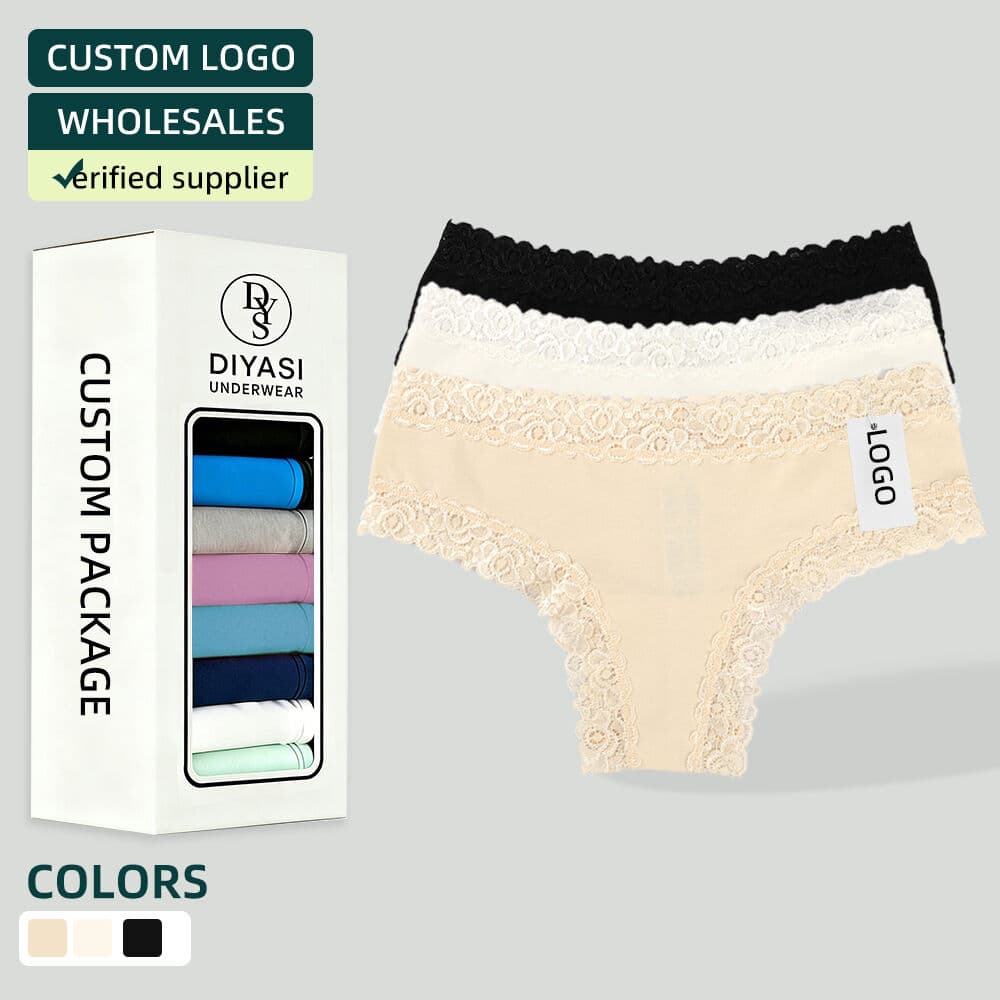
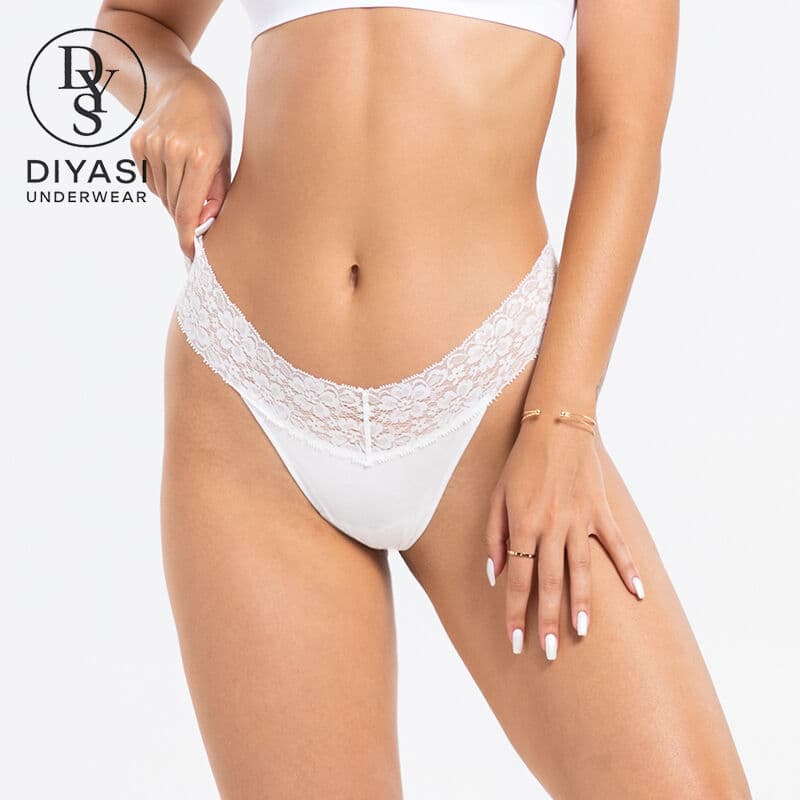
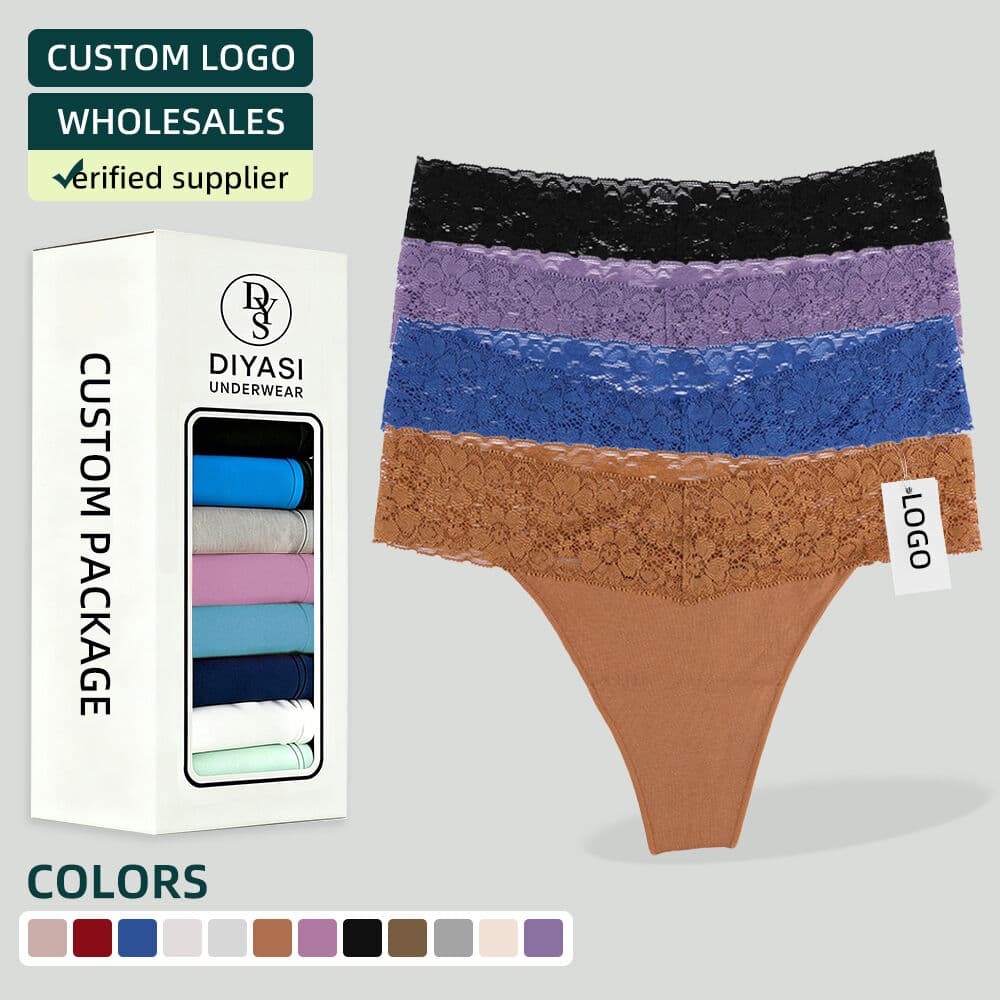
Use this private label lace underwear OEM guide to review cotton bodies, lace trims, coverage and sample approvals for boutique ranges. Start a lace underwear brief by specifying whether lace is the body fabric, a panel or a decorative trim. Then define stretch direction, edge finish, body composition and gusset. A photo of the motif alone cannot establish fit or skin feel.
Choose what the lace does
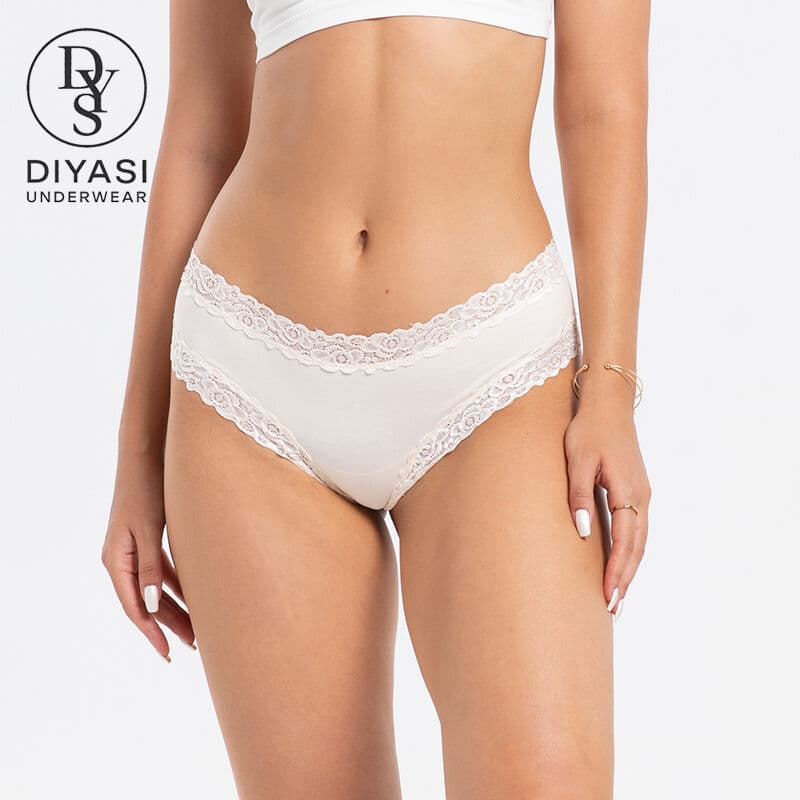
LS006 is a cotton Brazilian brief with lace trim; it is a different development route from an all-lace brief. Use the actual product composition when planning the collection and confirm trim specifications separately. The motif scale and repeat can affect how it is positioned across sizes.
| Detail | Approval point |
|---|---|
| Lace placement | Waist, leg opening, front panel or back panel |
| Stretch | Direction, extension and recovery in the garment |
| Edge finish | Scallop alignment, joins and contact with skin |
| Gusset | Fiber composition, coverage and attachment |
| Color | Body-to-lace match and consistency after washing |
Fit-check the smallest and largest sizes
Evaluate the tension around the waist and legs, the coverage at the back, and whether the lace stretches unevenly. A trim that lies flat on one size may press into the skin on another. Record measurements and the agreed tolerances.
Keep the approved trim reference
Retain a labeled lace swatch and finished sample so that later production can be compared with the same motif, color and hand feel. Ask the factory to reconfirm lace availability before a reorder; an apparently similar trim may behave differently.
Prepare a lace approval record
Keep a physical lace swatch with the approved garment. A photograph alone cannot reliably communicate stretch, hand feel or the way a scalloped edge sits against the wearer. Record which parts of the lace may be substituted and which require a new approval.
| Detail | Approval reference |
|---|---|
| Pattern and edge | Lace swatch, repeat direction and scallop placement |
| Color | Approved body/lace combination viewed together |
| Stretch | Fit check at waist and leg openings |
| Composition | Separate body, lace and gusset specifications |
Lace trim cotton underwear private label
A lace trim cotton underwear private label brief should name the body fabric and lace as separate purchasing and labeling components. The LS006 and LS005 records list a 95% cotton / 5% spandex body and 80% polyamide / 20% spandex lace. Keep a physical trim swatch with the sample so repeat orders can compare stretch, appearance and placement.
| Component | Retained reference |
|---|---|
| Body | Approved cotton/spandex sample and specification |
| Lace | Physical swatch and component blend |
| Assembly | Lace placement and agreed fit notes |
One more thing
Can a lace style have my own label?
Discuss label placement, dimensions and material so it works with the garment's construction. Confirm minimum quantities and approve the actual labeled sample.
Can I use this catalogue to choose a lace boyshort manufacturer?
The current lace catalogue examples are briefs and a thong, not a listed lace boyshort. If a boyshort in lace is required, ask the team to review a separate development brief and confirm feasibility.
What should I ask a lace underwear manufacturer about trim?
Ask which body and lace blends apply to the selected model, where the lace is placed and how the trim is attached. Review tension and coverage on the sample rather than treating a lace name as a specification.
What belongs in lace underwear trim sample approval?
Record the trim reference, width, placement, color and agreed stretch/fit checks. Keep the approved swatch and finished garment; a photograph alone does not establish feel or recovery.
Sources & further reading
Product examples refer to the DIYASI catalogue. External standards explain their own scope; a reference is not a claim that a specific garment or factory is certified.
DIYASI original product catalogue ↗Put the details into practice.
Share your selected styles, target market, planned quantity and branding needs.
Start a Project