Private label lingerie at DIYASI starts with a clearly defined underwear assortment and an approved brand specification. The Yiwu catalogue includes lace-trim briefs and thongs alongside cotton and seamless styles; a wider category request needs separate capability confirmation. Most listed models use a 120-piece-per-style reference, while custom labels, elastic and packaging can have different minimums. Decide which silhouettes belong together, how their materials will be described and what your brand needs to change. This page connects range planning with sample and component approval so the finished collection has a consistent identity without inventing shared specifications across different garments.
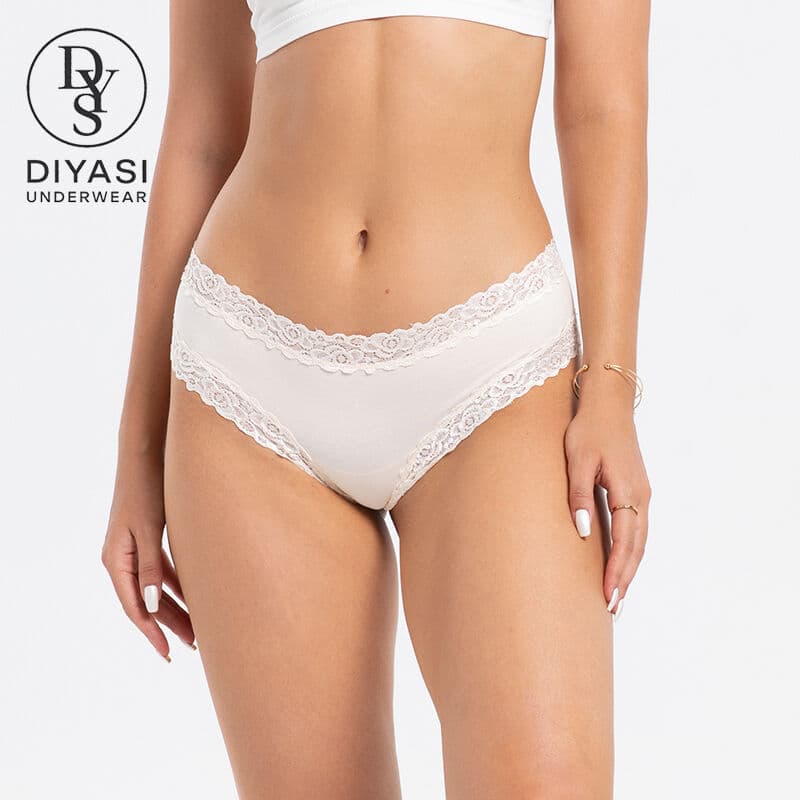
Use a range plan rather than one repeated label
Define the role of each style in the assortment: everyday coverage, a lower-coverage option or a decorative lace detail. Record the model and intended retail name together. A consistent brand appearance does not mean every piece has the same material statement or care information. Check the component composition for each model and keep its approved label artwork separate. This helps avoid a packaging shortcut that makes one garment's accurate specification incorrect on another.
Coordinate appearance with the actual materials
Create a sample review that compares body fabric, lace, elastic, thread and printed components together. Ask which colour references can be matched and which require a practical material choice. Do not promise identical appearance from a digital colour alone. Review how lace placement and logo positioning work across the selected sizes. If the design relies on a matched set or a particular visual rhythm, document that requirement before approving production rather than discovering differences during photography.
Build the packing specification around the customer experience
Identify what the buyer should receive in each pack, how size and model information will be found, and which components must remain attached. Confirm whether hangtags, bags, boxes and stickers are supplied as part of the order and how their minimums or costs are treated. Check the proof against the actual packed sample. A coherent private-label range is the result of linked garment, artwork and packing approvals; it is not established by applying the same logo to unrelated catalogue items.
Specifications to verify before sampling
| Specification | Published reference / confirmation needed |
|---|---|
| Category | Private Label Lingerie: Build a Coherent Underwear Range |
| LS006: composition | Body - 95%Cotton 5%Spandex Lace - 80%Polyamide 20%Spandex |
| LS005: composition | Body - 95%Cotton 5%Spandex Lace - 80%Polyamide 20%Spandex |
| LS006: source size range | Standard American / European Size - S / M / L/ XL |
| LS005: source size range | Standard American / European Size - S / M / L/ XL |
| Fabric weight (gsm) | No verified model-specific weight published; request a measured specification |
| Colour and process | Confirm model-specific availability, dye/print method and approved colour reference; do not infer a stock colour count |
| Minimum quantity | Catalogue reference: 120 pieces per style; custom fabric and components reviewed separately |
| Sampling | 5–7 day catalogue guidance, subject to brief and material review; courier time separate |
| Bulk production | 20-35 days depending on quantity and customization; order-specific confirmation required |
Create a label matrix for a coordinated range
Assign a brand SKU to every source model and retain that mapping in the packing file. A collection can share a visual identity while its garments use different components and care information. Check each label against its own product before approving a mixed pack.
| Range record | What belongs in it |
|---|---|
| Identity | Brand SKU ↔ source model ↔ approved sample |
| Label version | Model-specific composition and size artwork |
| Visual approval | Body, lace, elastic and print samples compared together |
| Pack plan | Contents by model and size, barcode/SKU match and artwork revision |
From the approved brief to an order
Keep the sample, specification, artwork and quotation on the same revision. Confirm charges, schedule, inspection scope and delivery terms for the actual order before production.
Full OEM / ODM workflow · Labels and packaging · Factory and quality checks · Inspection and defect checklist
Purchasing questions
Can one brand label be used across every model?
The logo may be shared, but fibre composition, size and care information must match each approved garment. Review model-specific labels and packing instructions before treating the range as one identical specification.
Can I use one fibre label for the whole collection?
Only where it accurately describes each finished product and meets destination requirements. Different body, lace or gusset materials need the appropriate model-specific information.
Related manufacturing services
Lingerie Manufacturer for a Defined Underwear Range
Private Label Underwear Manufacturer
Go deeper before requesting a quote
lace underwear oem guide boutique lingerie brands
private label underwear moq guide
OEM / ODM process · Material information · Company identity and evidence
Specifications above come from the published DIYASI catalogue and company pages. They are supplier information, not an independent audit or a substitute for order-specific confirmation.