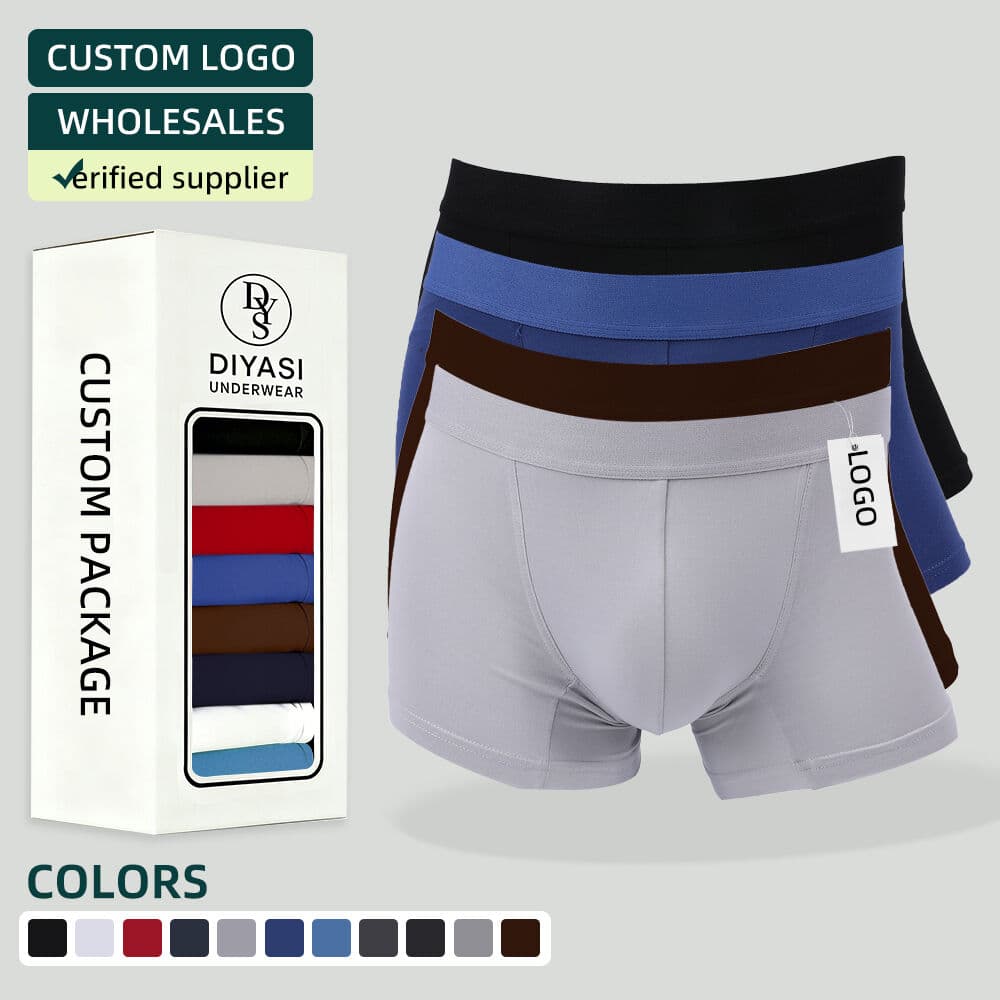
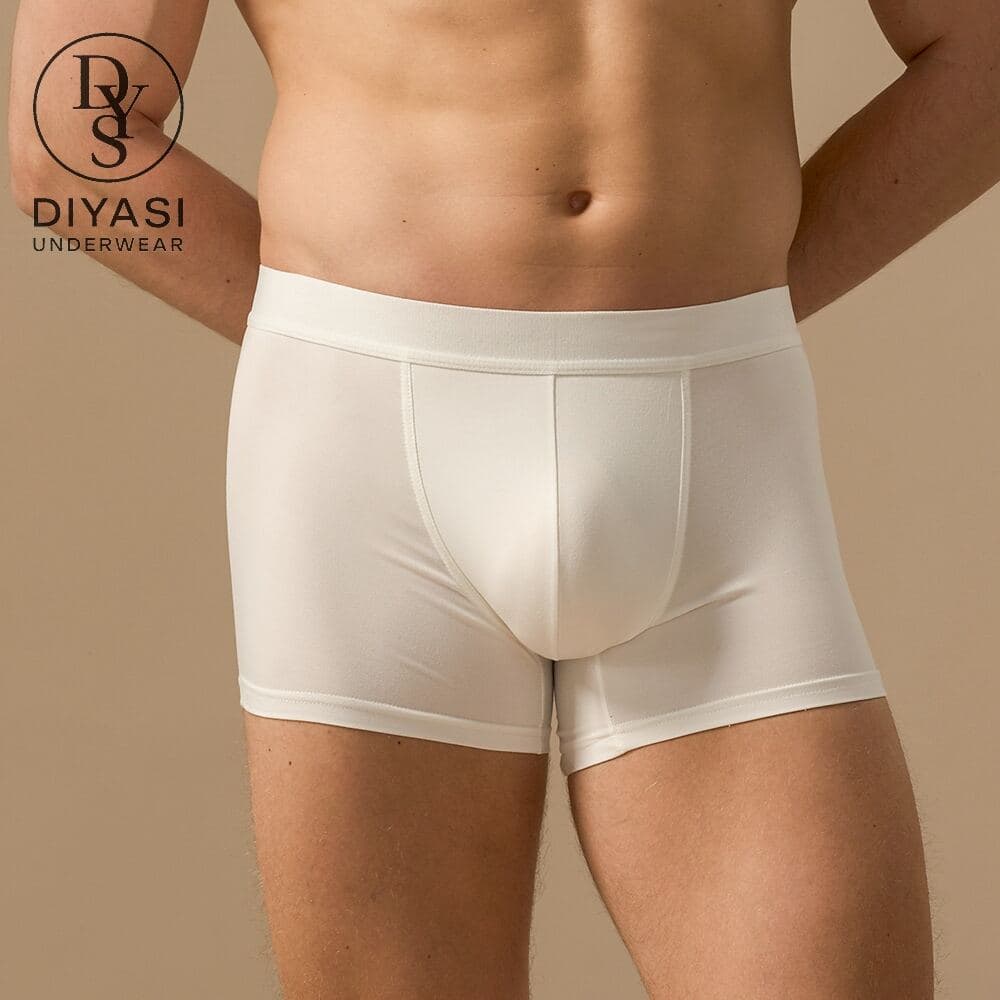
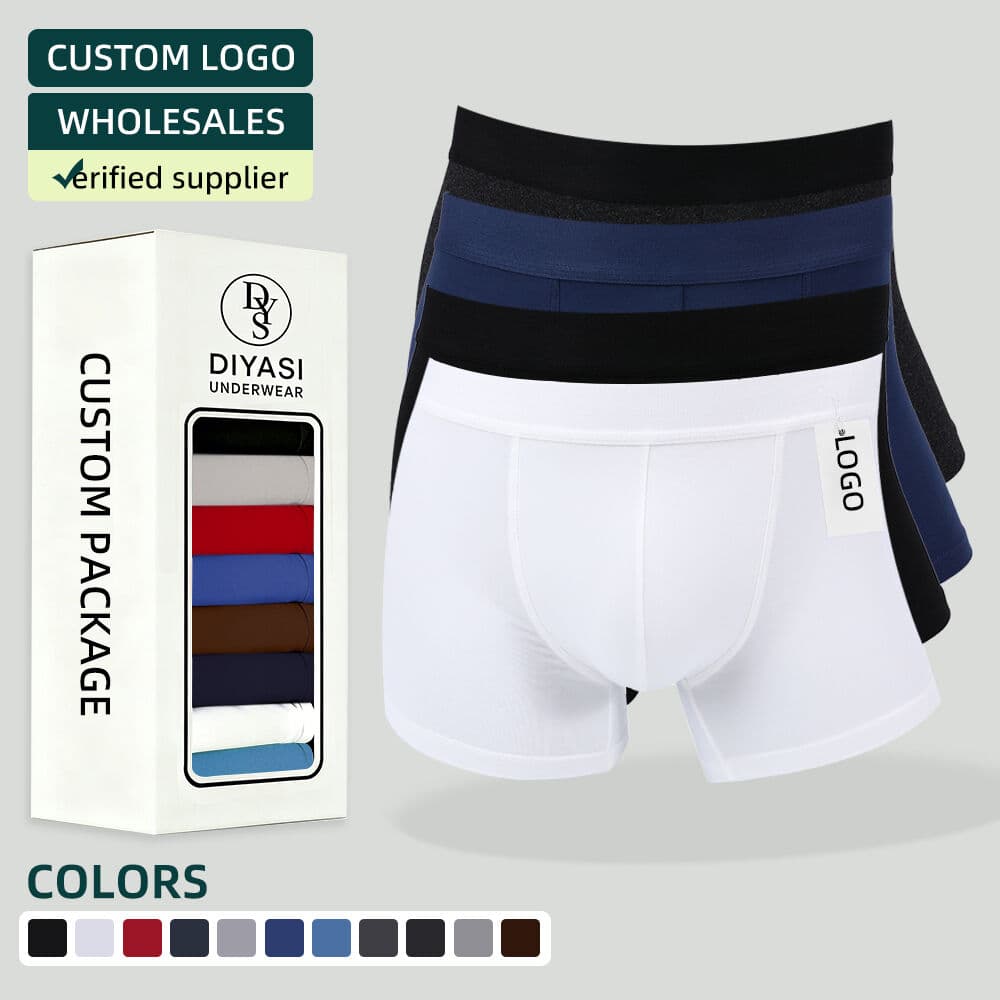
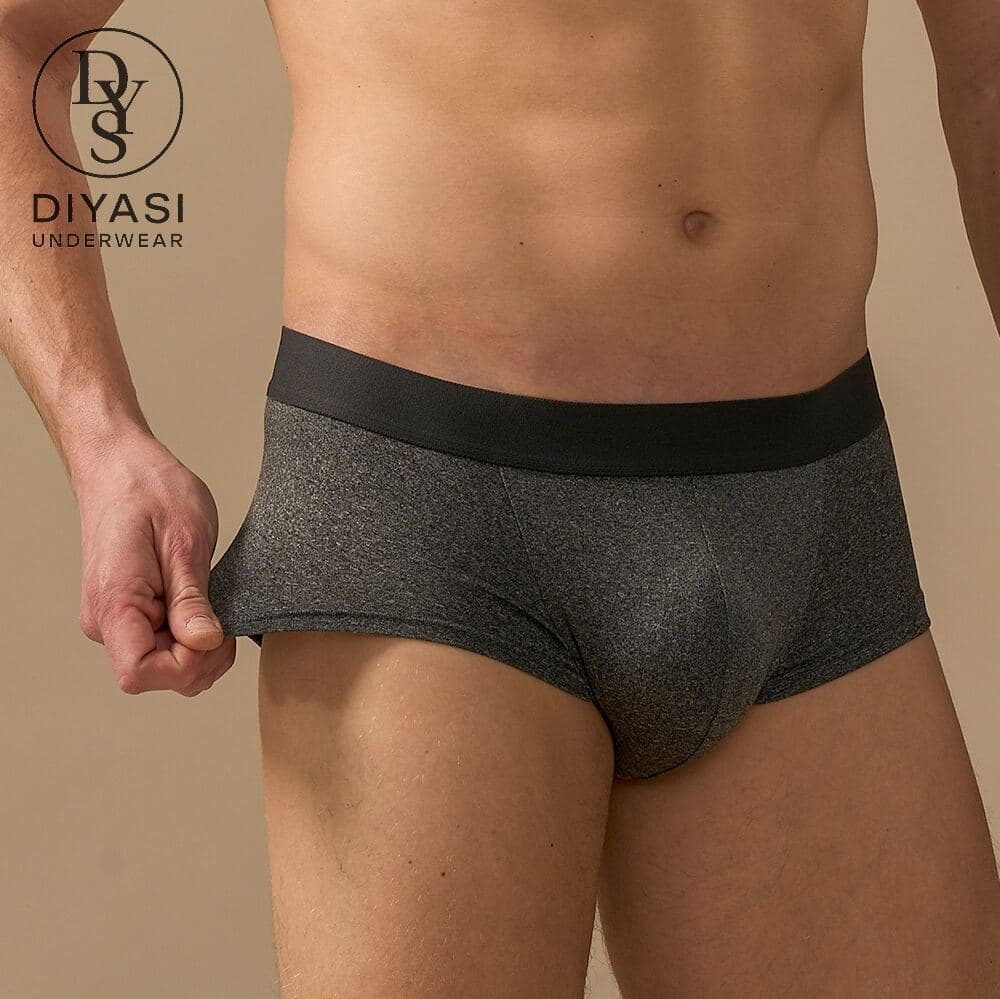
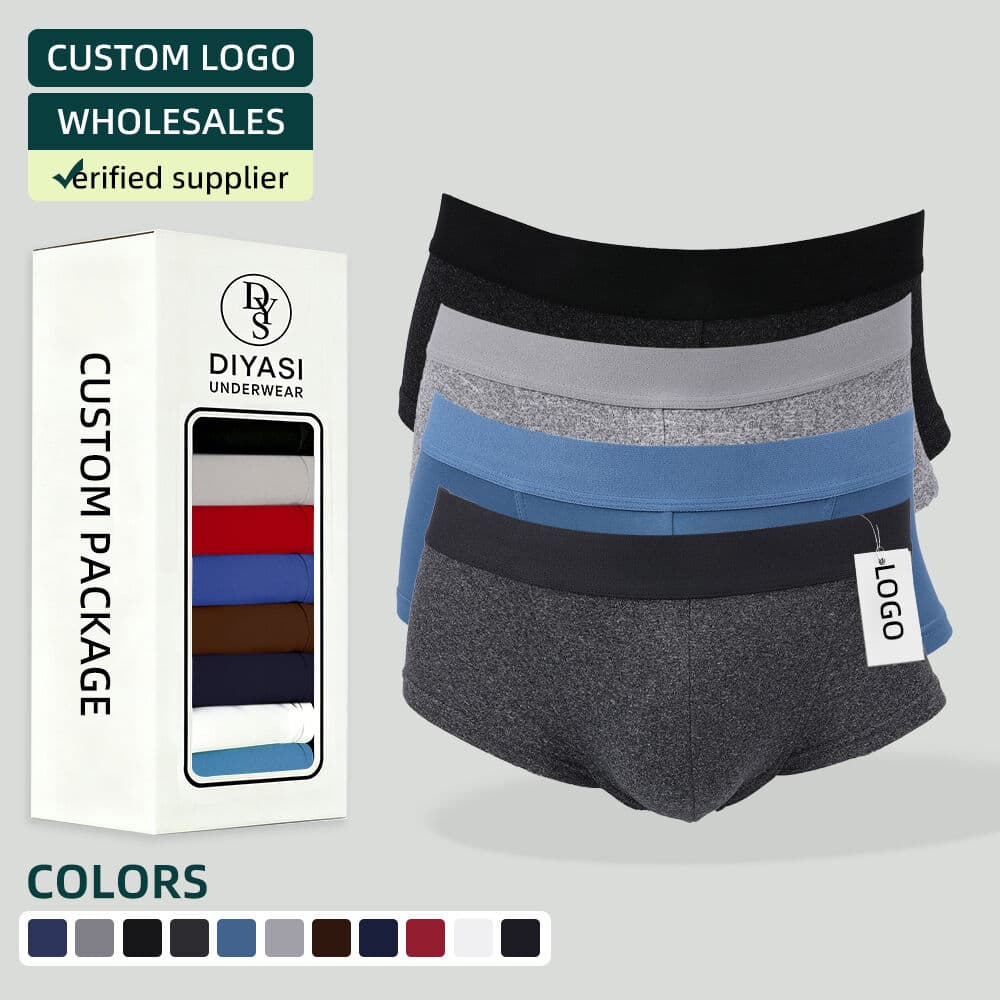
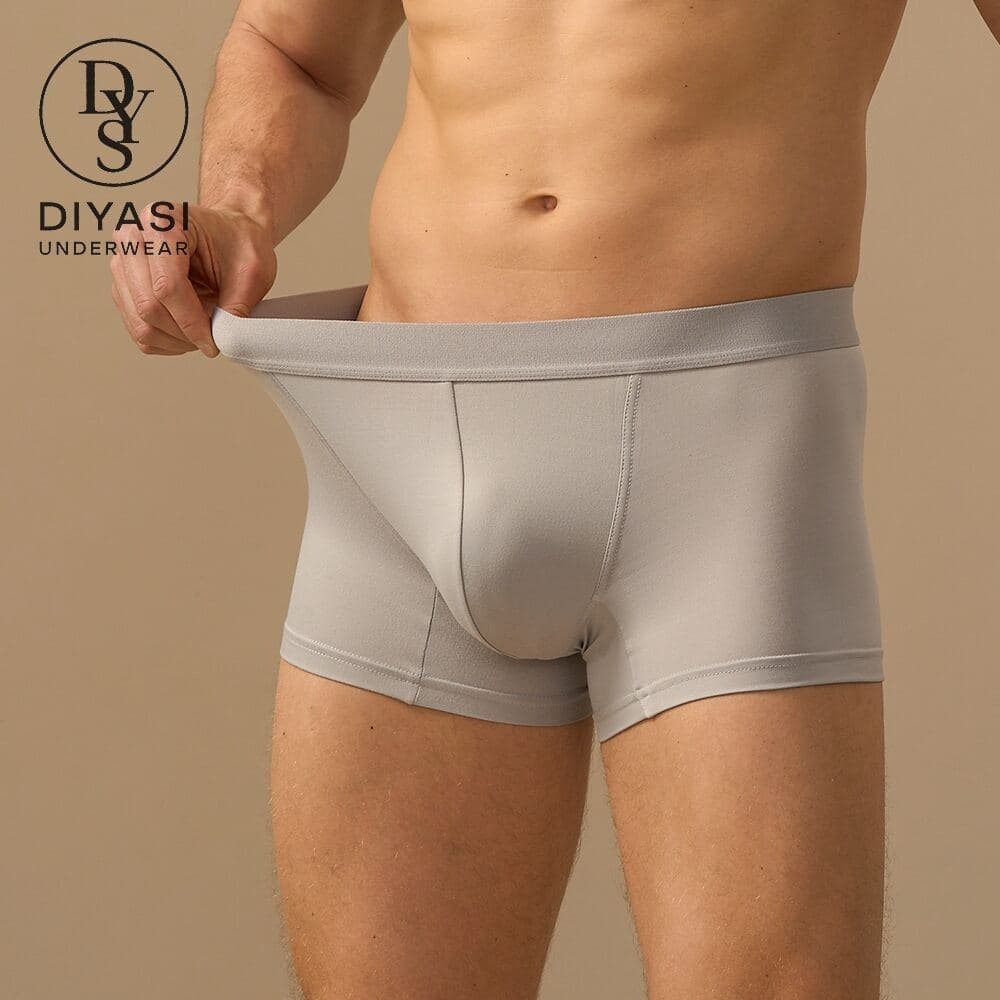
A no-fly front describes access construction; it does not define pouch volume or fit. DIYASI lists M004 as a mid-rise no-fly trunk, while M007 is a boxer brief and M001 a low-rise brief. These give buyers different starting shapes for a men's underwear range. The catalogue describes polyester-and-spandex bodies with modal in the pouch or gusset area, but precise percentages for these men's models still need confirmation. Keep body, lining and waistband details separate in the sample brief.
Specify the front construction and intended wearer
Identify whether the selected model has a functional fly, a decorative front seam or a closed front. Request inside and outside sample photographs and a construction drawing where the difference matters. State the intended rise, leg length and size range. A buyer cannot judge pouch shape from the product title alone, and a no-fly label should not be presented as a support claim.
Ask for finished front-rise and relevant pouch measurements with clearly defined measurement points. Fit comments should say whether the issue is at the seam, center front, under the pouch or waistband. Avoid substituting one wearer's preference for an objective performance result; record the wearer profile and conditions of each trial.
| Sample detail | Record | Why it matters |
|---|---|---|
| Front access | Fly or closed construction | Correct product description |
| Pouch shape | Pattern and seam placement | Targeted fit feedback |
| Lining | Component and confirmed composition | Accurate specification |
| Movement | Sitting, walking and bending notes | Revision priority |
Evaluate the lining as a separate component
A modal pouch or gusset does not make the entire garment modal. For M004, M007 and M001, the source descriptions distinguish body and pouch materials but do not provide every component percentage. Request the order-specific composition and finish before writing a retail material claim. If a printed or alternative version is selected, confirm that its specification is the same rather than assuming the model name proves it.
Look for seam bulk and placement where the pouch joins the body. Ask how a changed lining or stitch would affect the approved sample, then review the revision in the finished garment. Do not infer breathability, support or reduced friction from the fiber name alone.
Turn fit notes into an approved reference
Keep a versioned record of sample measurements, inside details and wearer comments. If a revision addresses pressure at one seam, check that it has not altered the waistband position or leg fit. Review representative sizes to see whether grading preserves the intended shape.
Before bulk production, approve a named physical sample and a written specification for front construction, component materials, seams, size chart and labeling. The factory can then compare later production against an actual reference rather than a phrase such as 'comfortable pouch'.
Common buyer questions
Does no-fly mean the front is seamless? No. A closed front can still use shaping seams; inspect the selected model.
Is a modal pouch a modal garment? Not unless the full garment composition supports that wording.
Can one size establish the fit? It is a useful starting point, but the planned size range needs a grading review.
Put your research to work
Browse men's underwear ↗Compare briefs and trunks ↗Read the component-spec guide ↗Send a men's sample brief ↗Product sources
Product examples refer to the linked DIYASI source specifications. Confirm the final materials, measurements and availability for your selected sample.
M004 original product specification ↗M007 original product specification ↗M001 original product specification ↗A starting point for your collection.
Share your selected model numbers, intended market and sample requirements with the DIYASI team.
Discuss your collection ↗