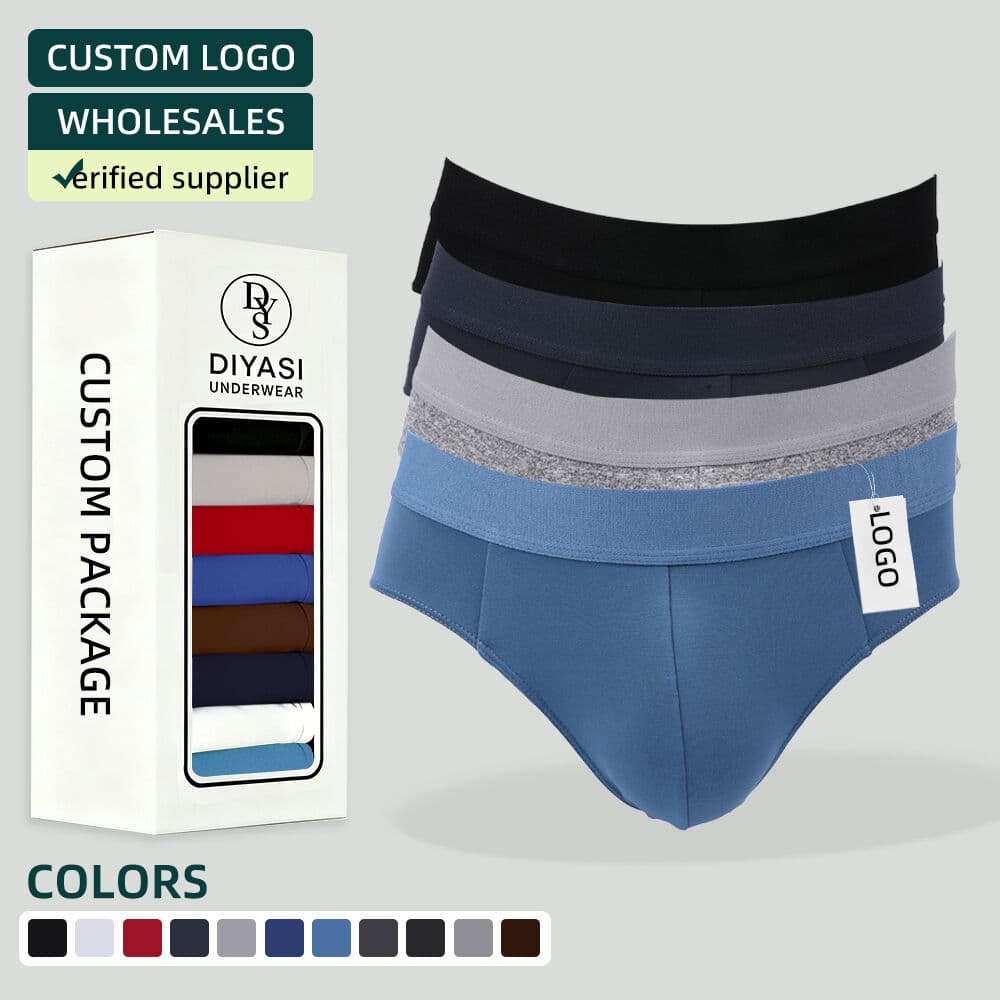
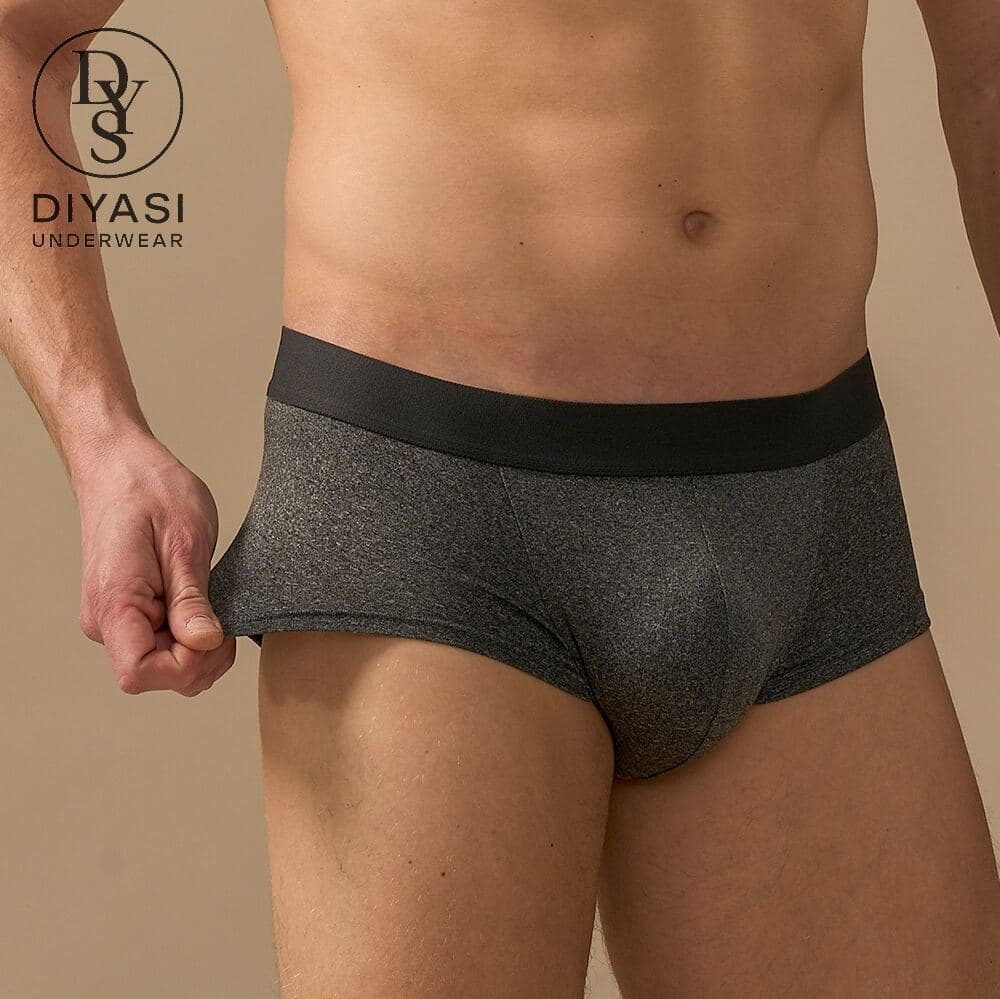
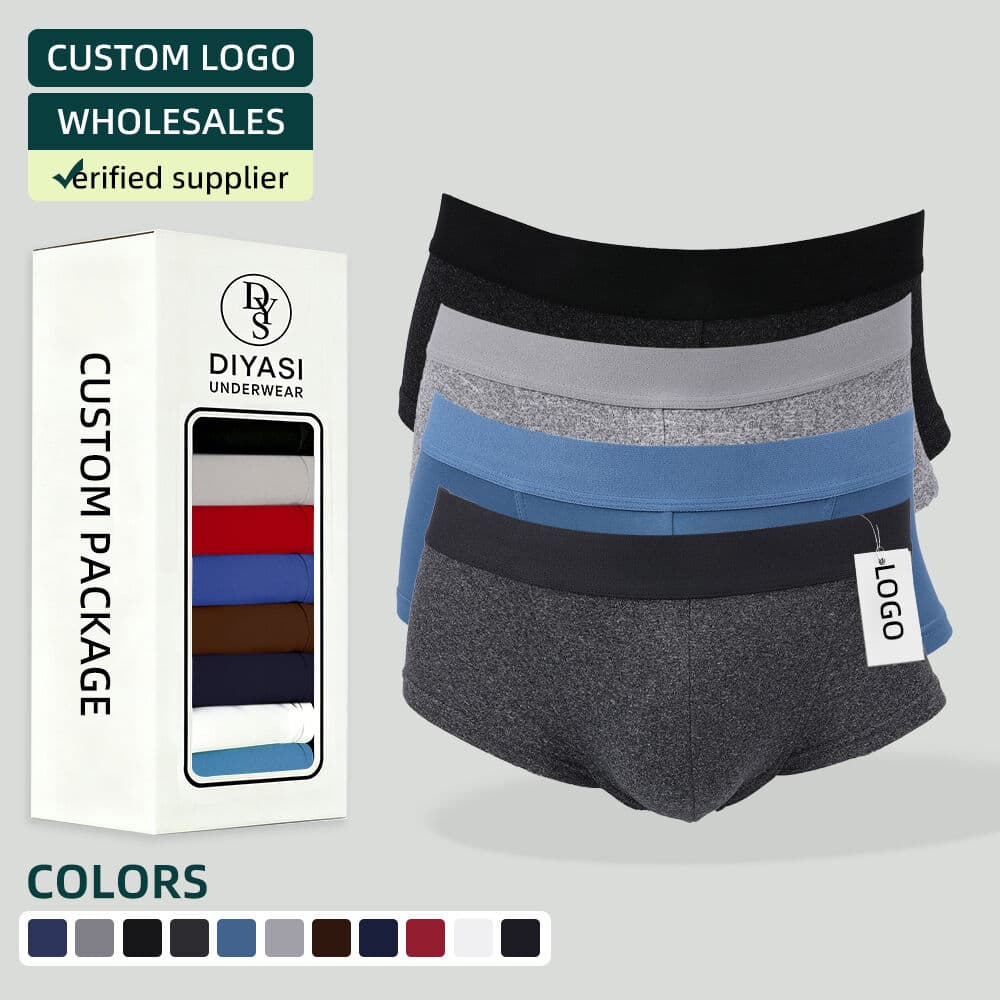
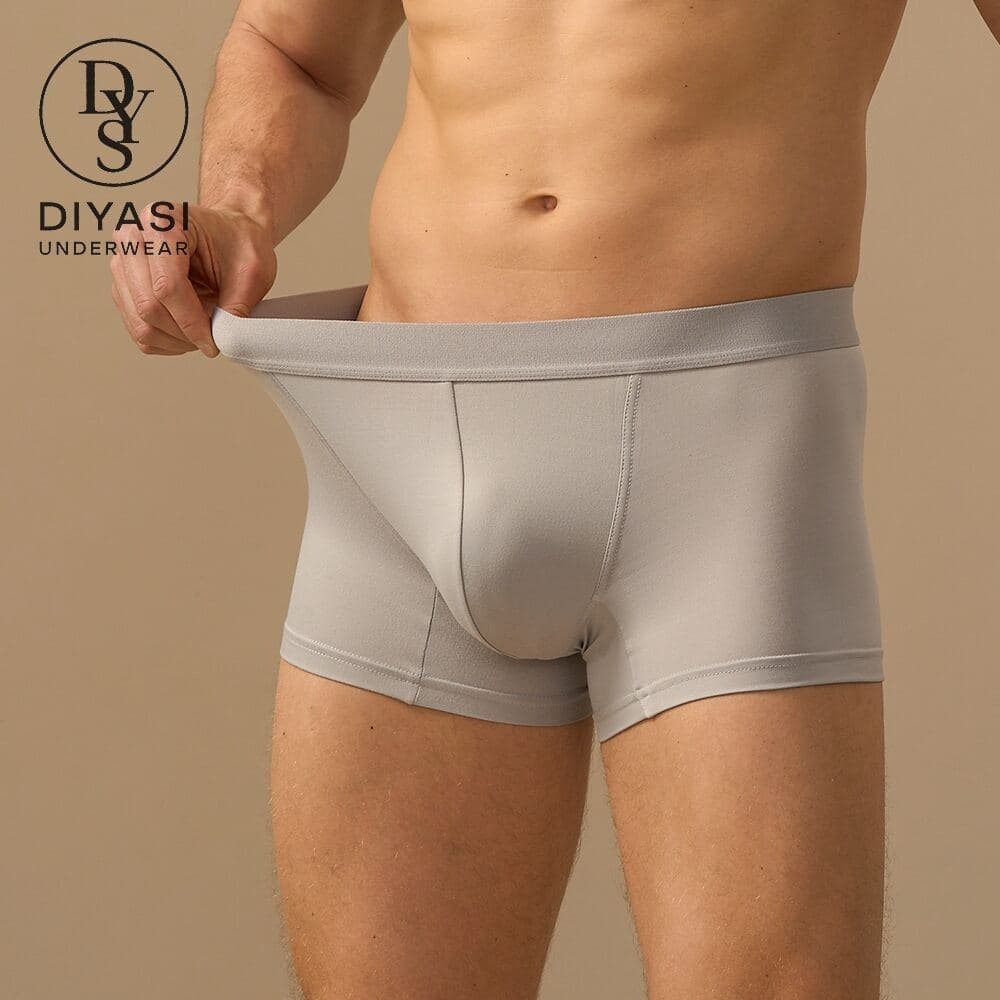
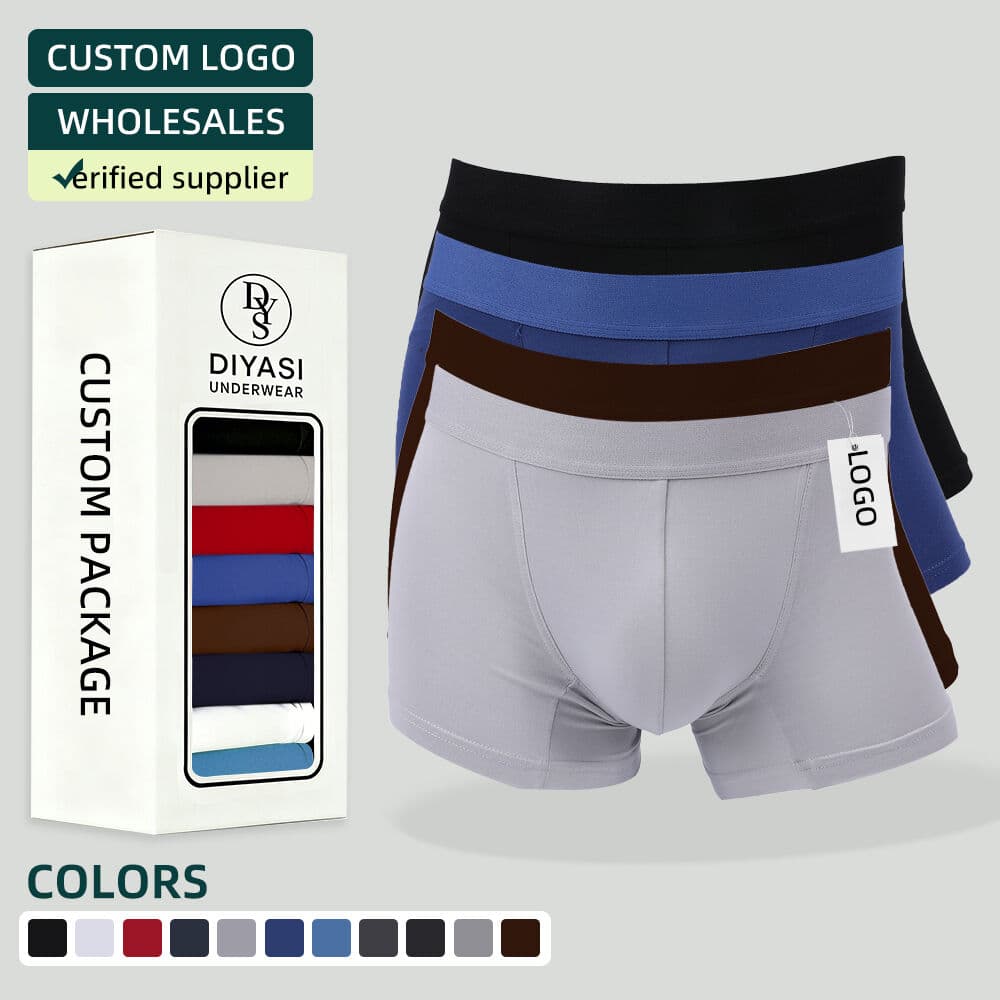
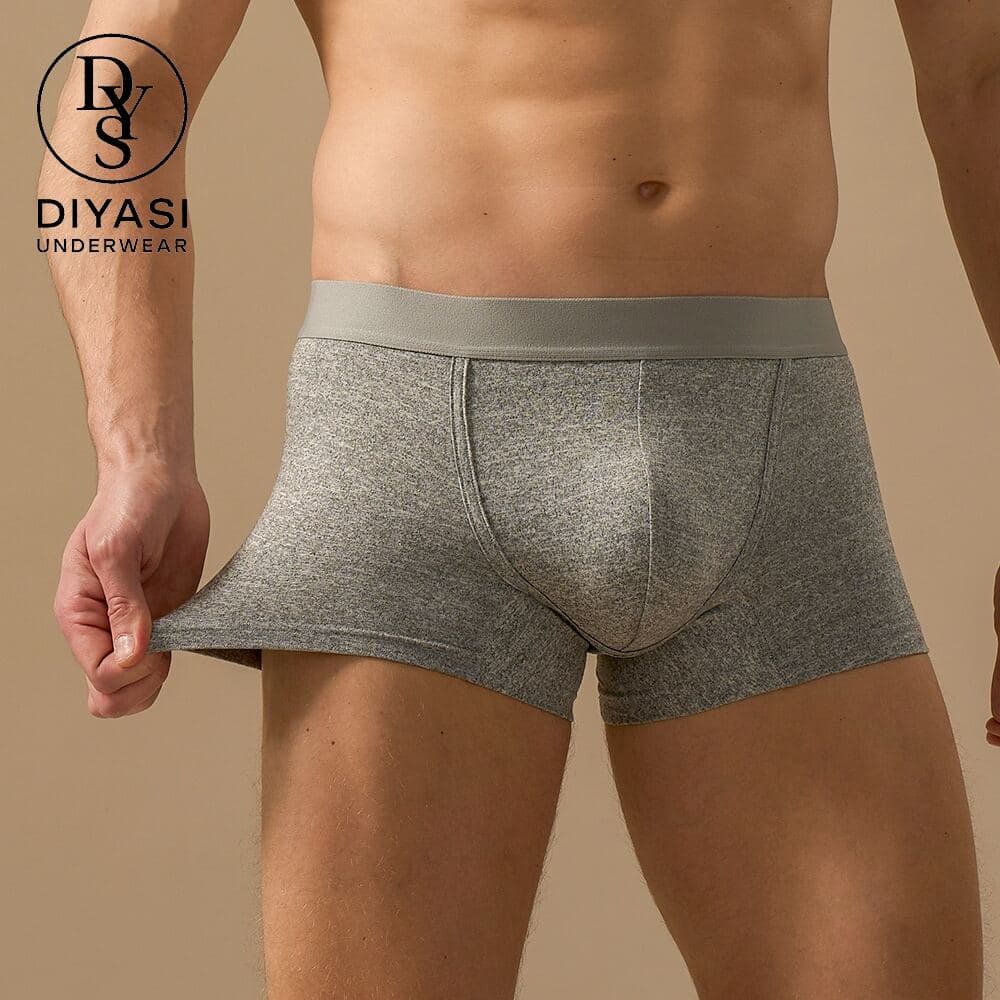
The main buying distinction between men's briefs and trunks is the leg silhouette: briefs leave more of the upper leg uncovered, while trunks include short legs. Rise, pouch shape, fly construction and waistband tension remain separate decisions. DIYASI's M001 low-rise brief, M008 low-rise bikini brief and M004 mid-rise trunk let a private-label buyer compare these choices using identifiable catalogue styles. None of the names alone proves support, moisture management or a particular comfort outcome.
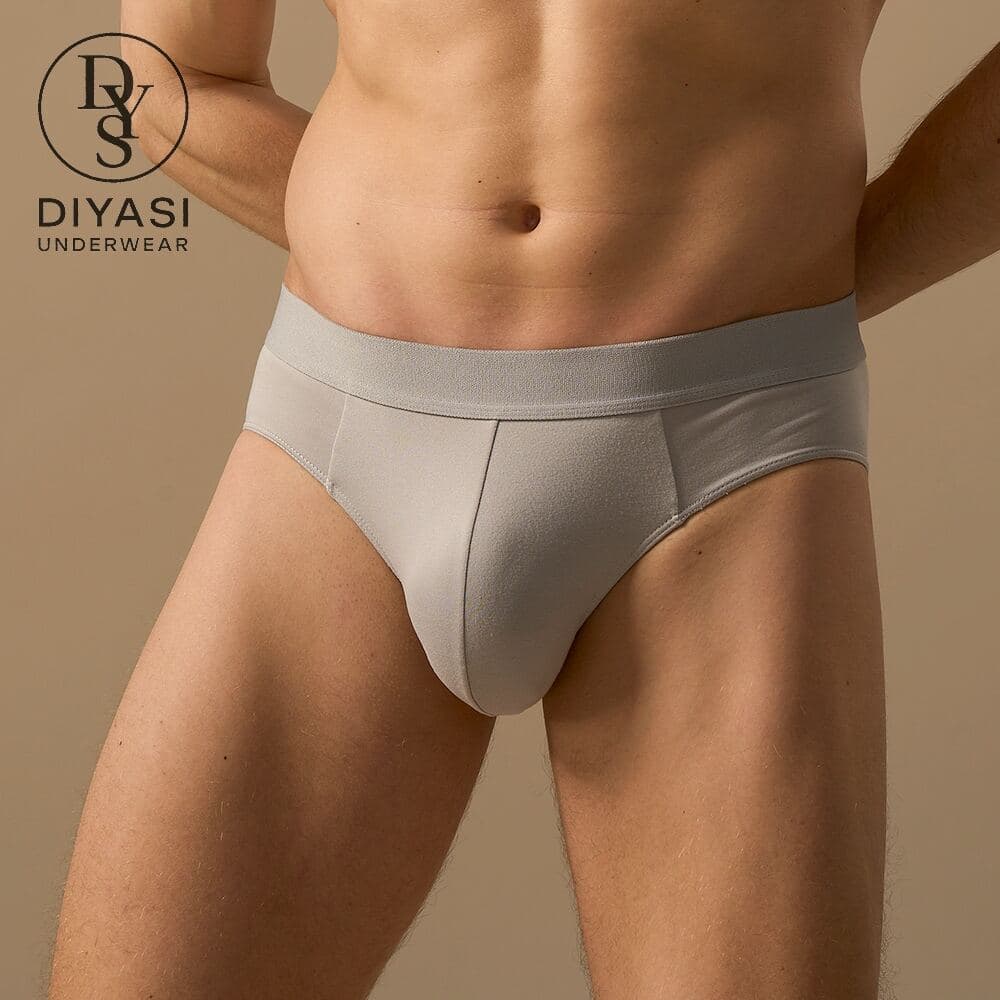
Use three references to define the intended coverage
The current catalogue lists these styles in S through 3XL. Each describes a polyester-spandex body and modal lining at the pouch or gusset, without publishing exact fibre percentages. Request the final component composition before preparing labels or making a fabric claim.
Keep model numbers attached to the photographs in your shortlist. A generic request for men's briefs can leave the supplier uncertain about side width, leg opening and waistband position. The table gives a starting point; approved measurements determine the order.
| Model | Listed silhouette | Feature to compare |
|---|---|---|
| M001 | Tagless low-rise brief with no-fly pouch | Side coverage, leg opening and label execution |
| M008 | Low-rise bikini brief with no-fly front | Bikini outline and covered elastic waistband |
| M004 | Mid-rise no-fly trunk | Short-leg fit, waistband position and pouch shape |
Measure rise and leg openings separately
For the briefs, request front and back rise, side width and leg-opening measurements with illustrated endpoints. For the trunk, add inseam and hem-opening measurements. Do not use a trunk inseam as a way to describe a brief that has a different leg construction.
Define whether waist and openings are measured relaxed or under an agreed stretch method. A flat width is not a wearer waist circumference. Keep the buyer's body-size chart separate from the finished-garment specification, and use a fit review to assess the relationship between them.
Evaluate the pouch independently of leg length
Review pouch depth, lining coverage, seam location and the inside finish on each sample. The length of the outer leg does not establish how much room the pouch provides. Likewise, a no-fly design describes the front opening arrangement rather than a measured support level.
Ask reviewers to identify where pulling or excess fabric occurs while standing and sitting. Keep feedback about the pouch separate from comments on leg hems and the waistband. This allows the factory to propose a targeted pattern change instead of changing the entire size.
Plan the first assortment around distinct needs
If a brand is testing demand for less leg coverage, one brief and one trunk can provide a clearer comparison than several similar trunk variations. Use customer evidence to decide the eventual mix. Catalogue breadth is not evidence that every silhouette deserves equal order quantities.
For a fair sample review, use the same intended body-size reference and document the requested colour and waistband direction. Confirm availability, branding changes and quantities separately for each model. A common size label or a similar photograph is not a promise of shared patterns or stock.
Questions buyers ask about men's briefs and trunks
Is a bikini brief just a smaller standard brief? Not necessarily. Side width and leg shape may change without the garment belonging to a smaller body-size category. Review the pattern and measurement chart.
Are trunks automatically better for sport? No. Activity-specific performance needs its own design requirements and evidence; short legs alone do not establish suitability.
Can one size chart cover both styles? A body-size guide may be shared if fit development supports it, but finished measurements and grading still need approval for each silhouette.
Put your research to work
Browse men's underwear ↗Compare trunks with longer boxer briefs ↗Understand modal pouch specifications ↗Prepare a custom men's waistband ↗Product sources
Product examples refer to the linked DIYASI source specifications. Confirm the final materials, measurements and availability for your selected sample.
M008 original product specification ↗M001 original product specification ↗M004 original product specification ↗A starting point for your collection.
Share your selected model numbers, intended market and sample requirements with the DIYASI team.
Discuss your collection ↗