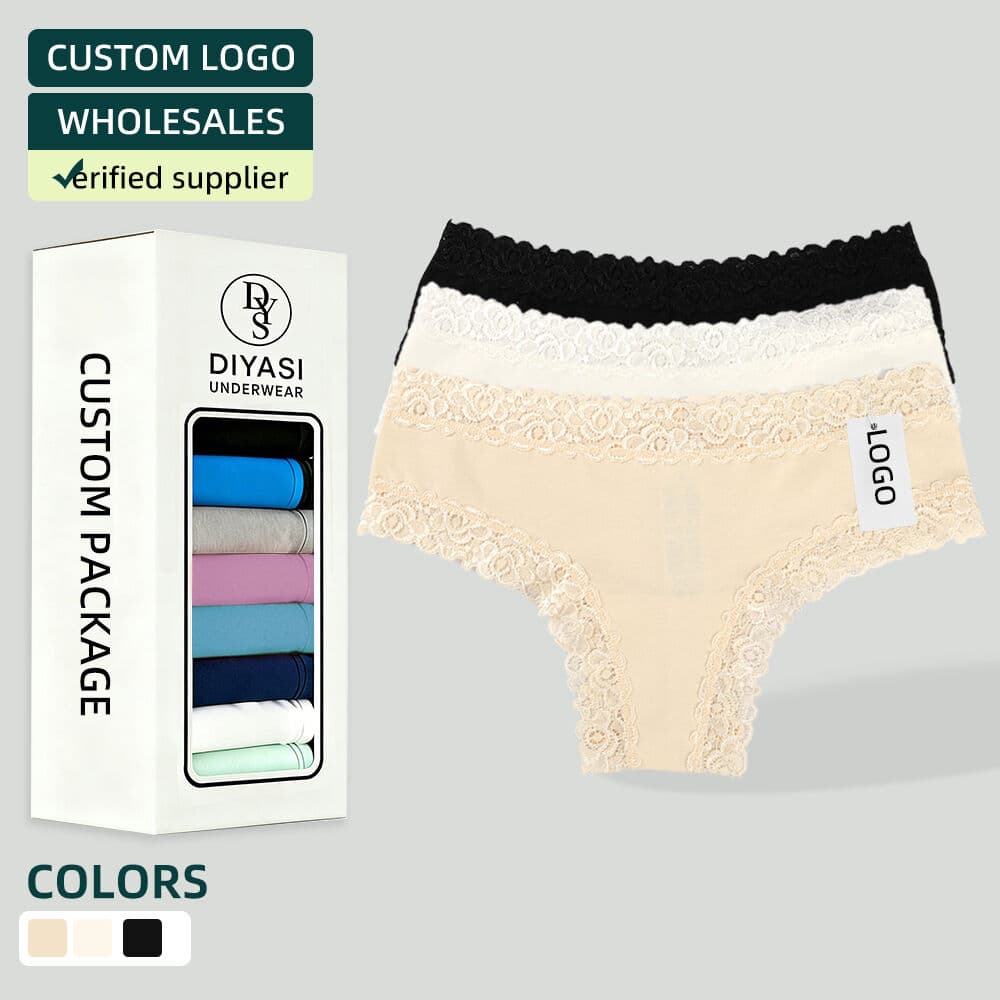
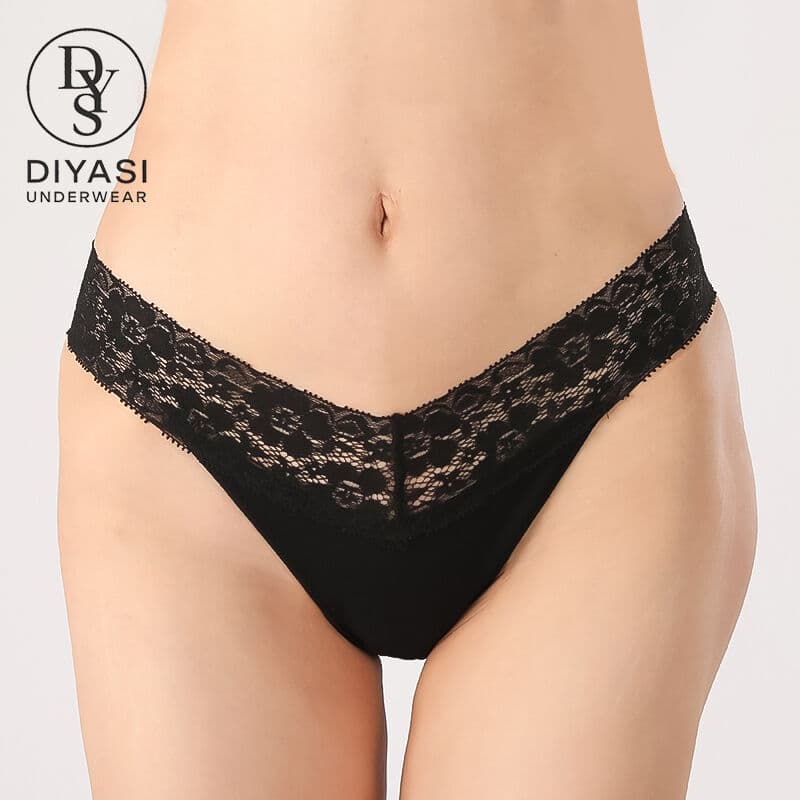
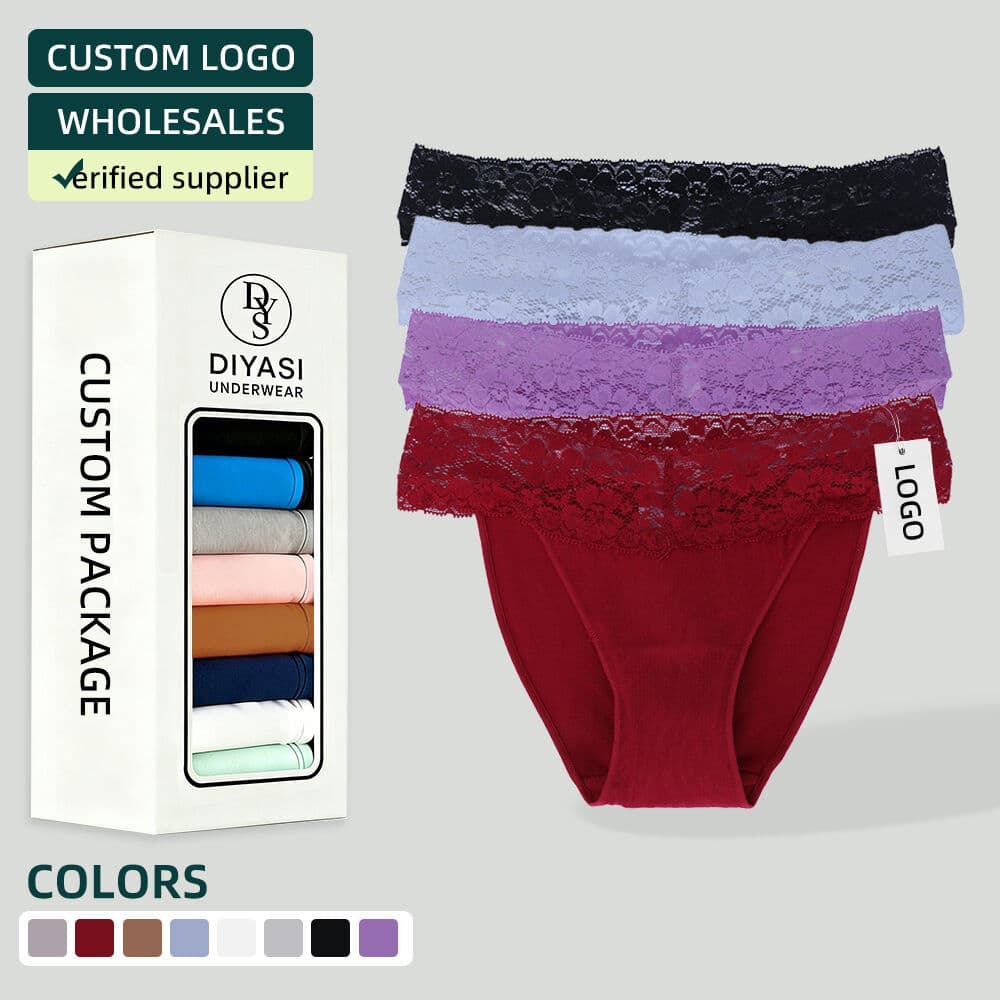
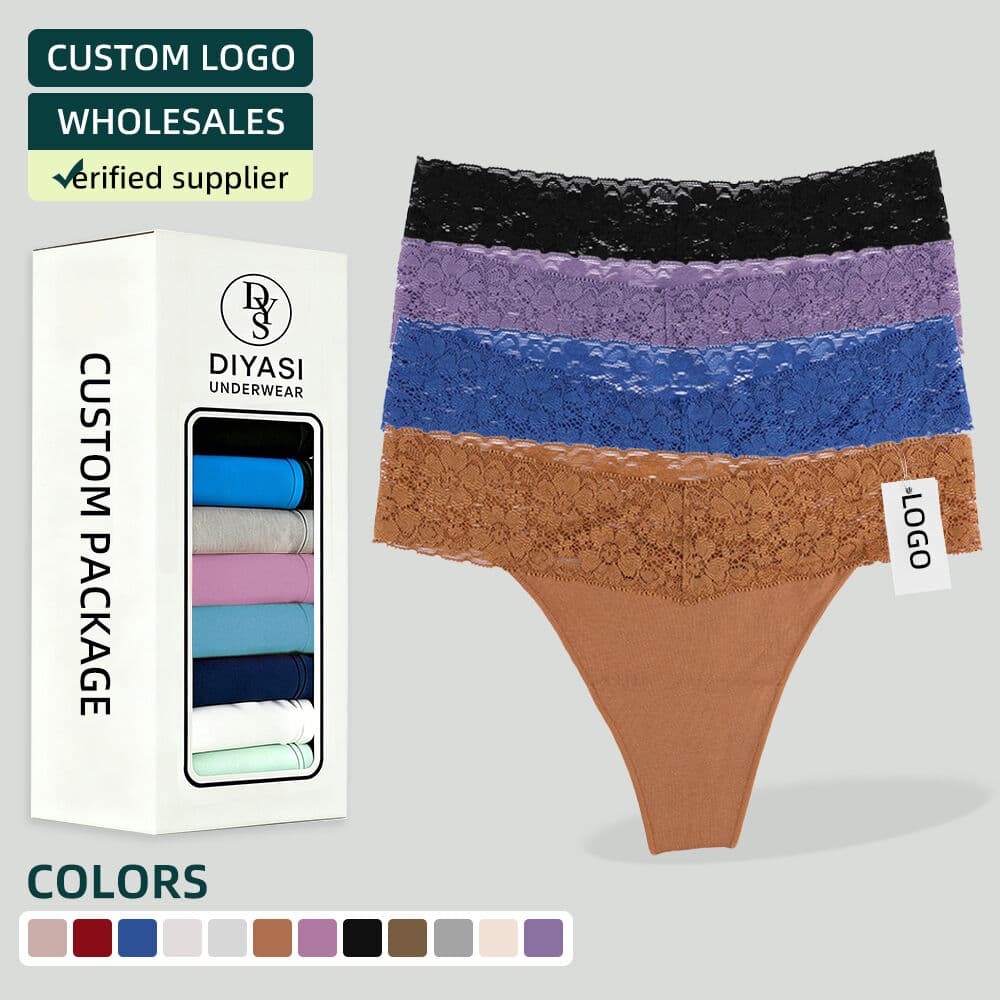
Lace trim changes the shape and feel of an underwear edge, so it should be specified as a component rather than a decorative note. DIYASI's LS006 Brazilian brief, LS005-142 brief and LS005 thong list cotton-spandex bodies with polyamide-spandex lace. Their different silhouettes make placement and stretch especially important to review. A catalogue image shows the design direction; it does not prove that the trim behaves the same across sizes or colors.

Map the trim on the actual pattern
Mark where lace begins and ends at the waist, side and leg opening. Record the finished width, orientation, color and the side that touches the wearer. A lace edge near the leg may need a different fit review from lace placed only at the waist. Share front, back and inside images with the factory so the intended placement is unambiguous.
Keep the lace specification separate from the body fabric and gusset. The source composition for the three referenced LS styles identifies the body and lace, but the selected order still needs confirmed component details, shade and availability. Do not use a body-fabric composition claim to describe the entire garment.
| Trim decision | Sample evidence | Approval question |
|---|---|---|
| Placement | Front, back and inside photos | Is it on the intended edge? |
| Stretch | Measured trim and body response | Do components move together? |
| Skin contact | Wearer location notes | Does the edge cause unwanted pressure? |
| Shade | Body and lace under agreed light | Is the match acceptable? |
Check component stretch as a system
If lace and body fabric recover differently, the finished edge may ripple, tighten or pull out of shape. Ask the maker how it controls trim length during attachment and request the intended measurement method. Compare the finished garment, not only loose lace or fabric swatches. A fit review should identify the sample size and the wear conditions in which the issue appears.
Inspect inside seams and lace joins for rough points or uneven attachment. Record observations without claiming a medical or skin-safety outcome. If the trim is changed for color or cost, treat the substitution as a new component that may need fit and care review.
Protect the approved look in production
Save an approved trim swatch or sample with a component code, color reference and attachment drawing. Specify any acceptable shade variation and who decides borderline cases. The factory and buyer should agree how to handle a lace delivery that differs from the approved reference before cutting begins.
Review the selected size range and the intended care method. A lace edge that passes one static inspection may still shift after use or washing. Document the test conditions and decision rather than claiming universal comfort or longevity from a single photograph.
Common buyer questions
Can the same lace be used on every silhouette? Placement and length need review against each pattern and size range.
Is matching color enough? No. Stretch, edge feel, width and attachment also affect the finished garment.
What should a sample request include? Name the model, lace area, color reference, component details and intended wearer review.
Put your research to work
Explore lace styles ↗Read the lace OEM guide ↗Review color approval ↗Discuss trim options ↗Product sources
Product examples refer to the linked DIYASI source specifications. Confirm the final materials, measurements and availability for your selected sample.
LS006 original product specification ↗LS005-142 original product specification ↗LS005 original product specification ↗LS005 original product specification ↗A starting point for your collection.
Share your selected model numbers, intended market and sample requirements with the DIYASI team.
Discuss your collection ↗