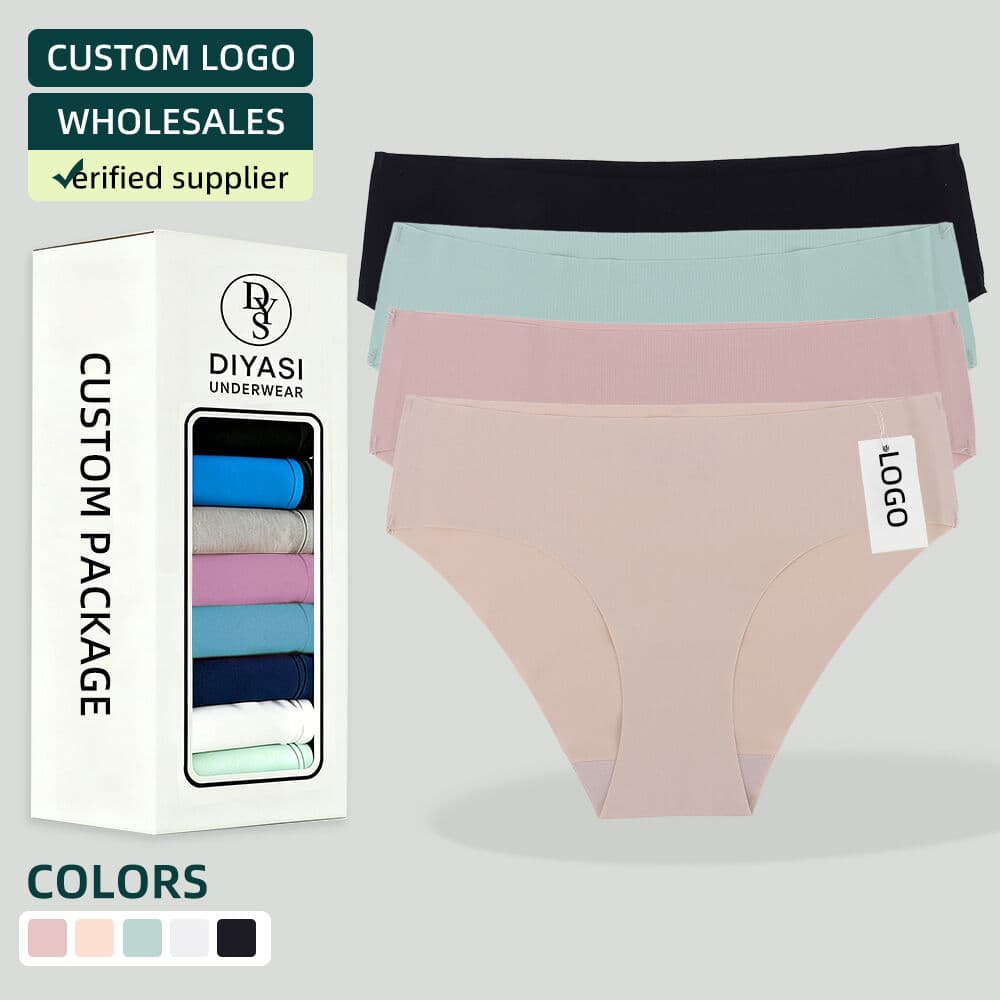
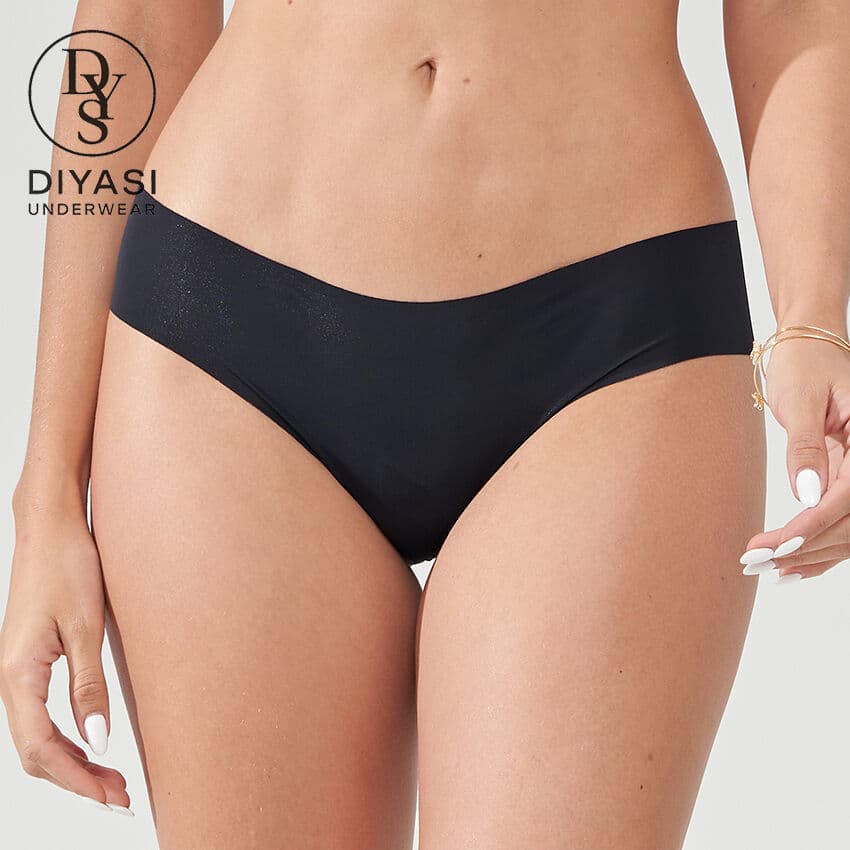
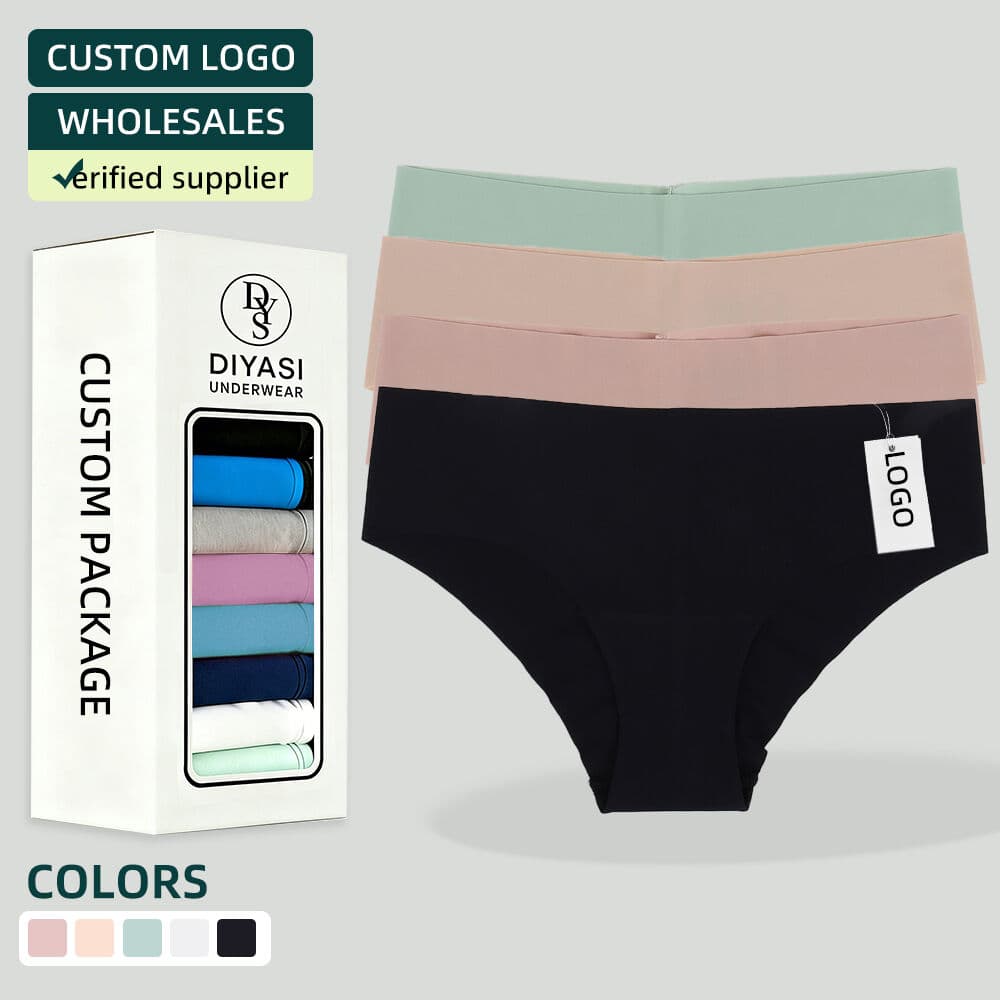
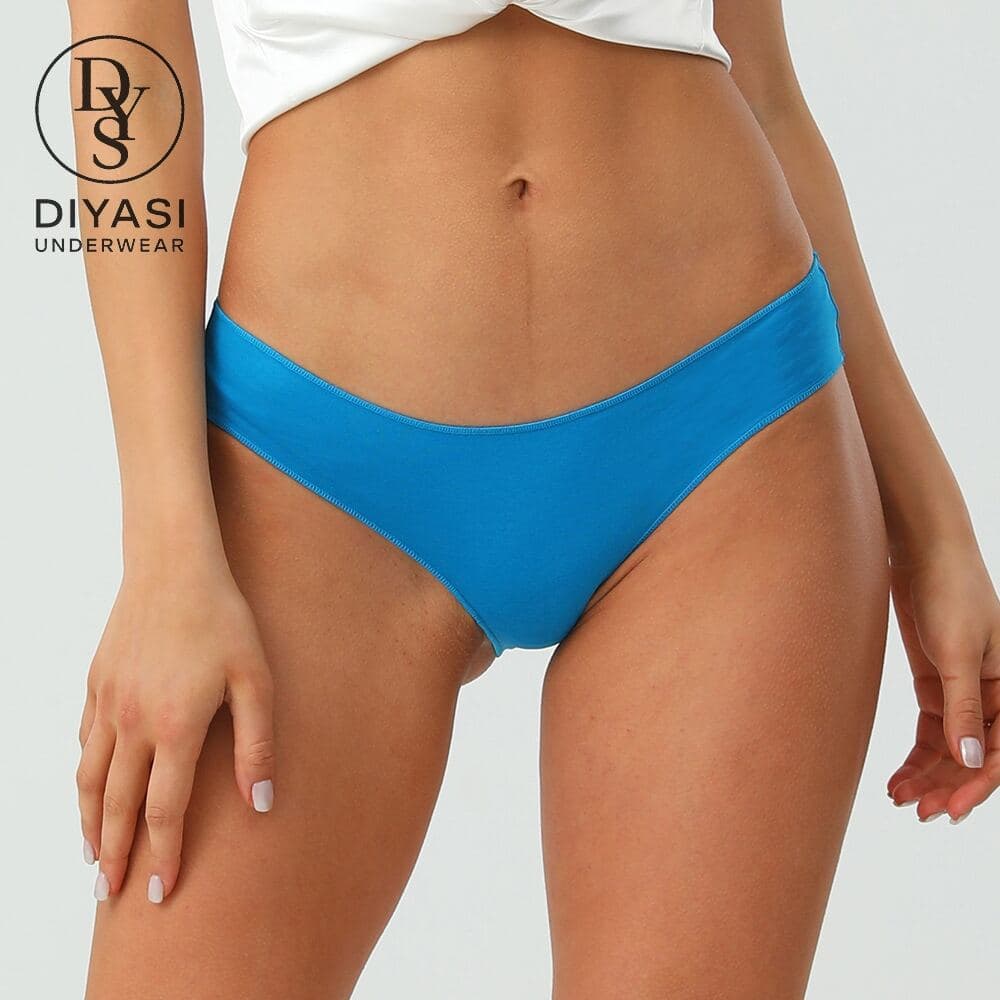
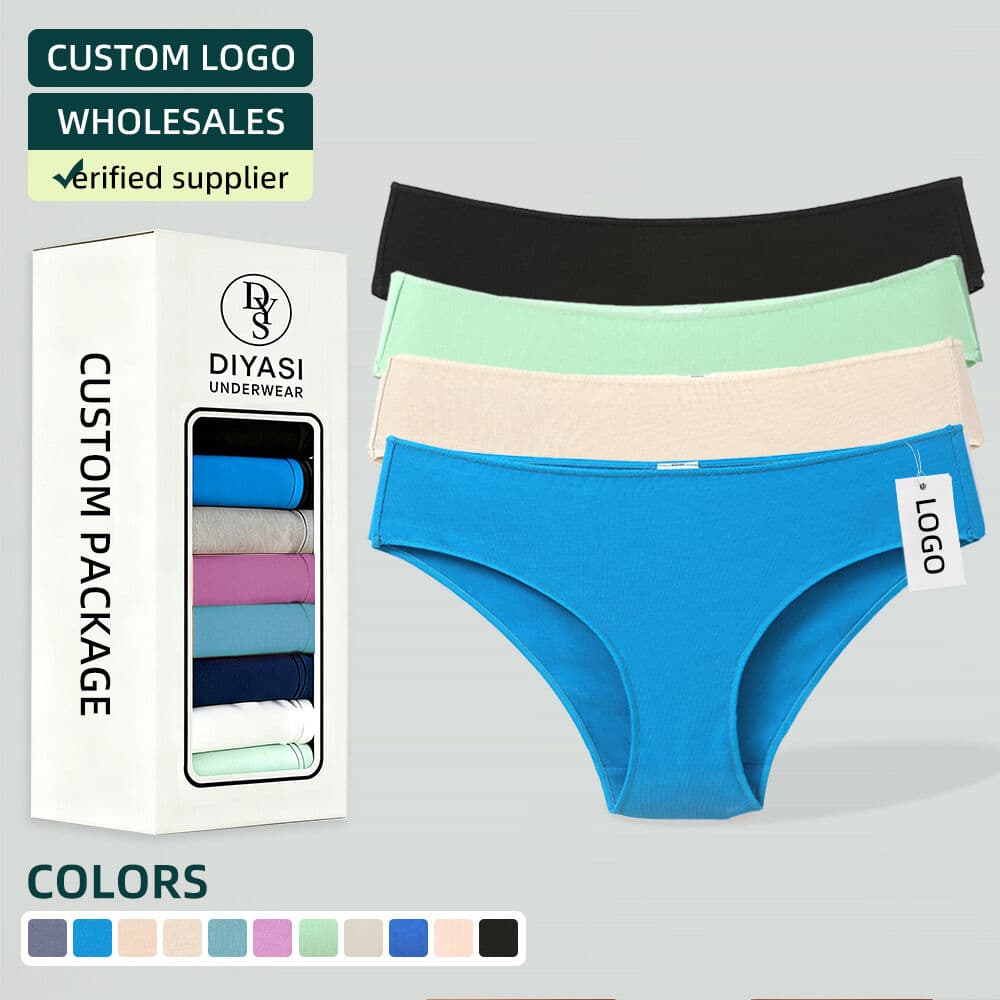
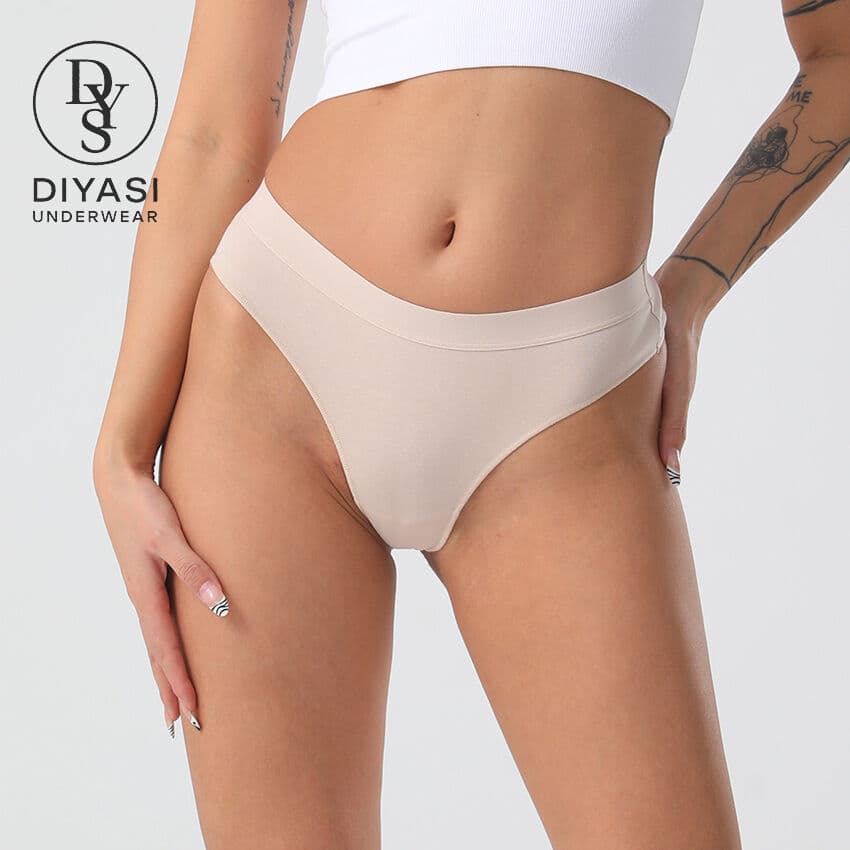
A shopper may search for cotton underwear and then find a seamless style described as having a cotton gusset. Those statements answer different questions. DIYASI's DYS323 and DYS311 list polyamide-spandex bodies with cotton gussets; DYS201 lists a cotton-spandex fabric. Buyers should keep body and lining specifications separate when building a product page, a packaging claim and a sample brief. The distinction helps shoppers choose accurately without suggesting that a cotton-lined seamless brief is an all-cotton garment.
Draw a simple component map
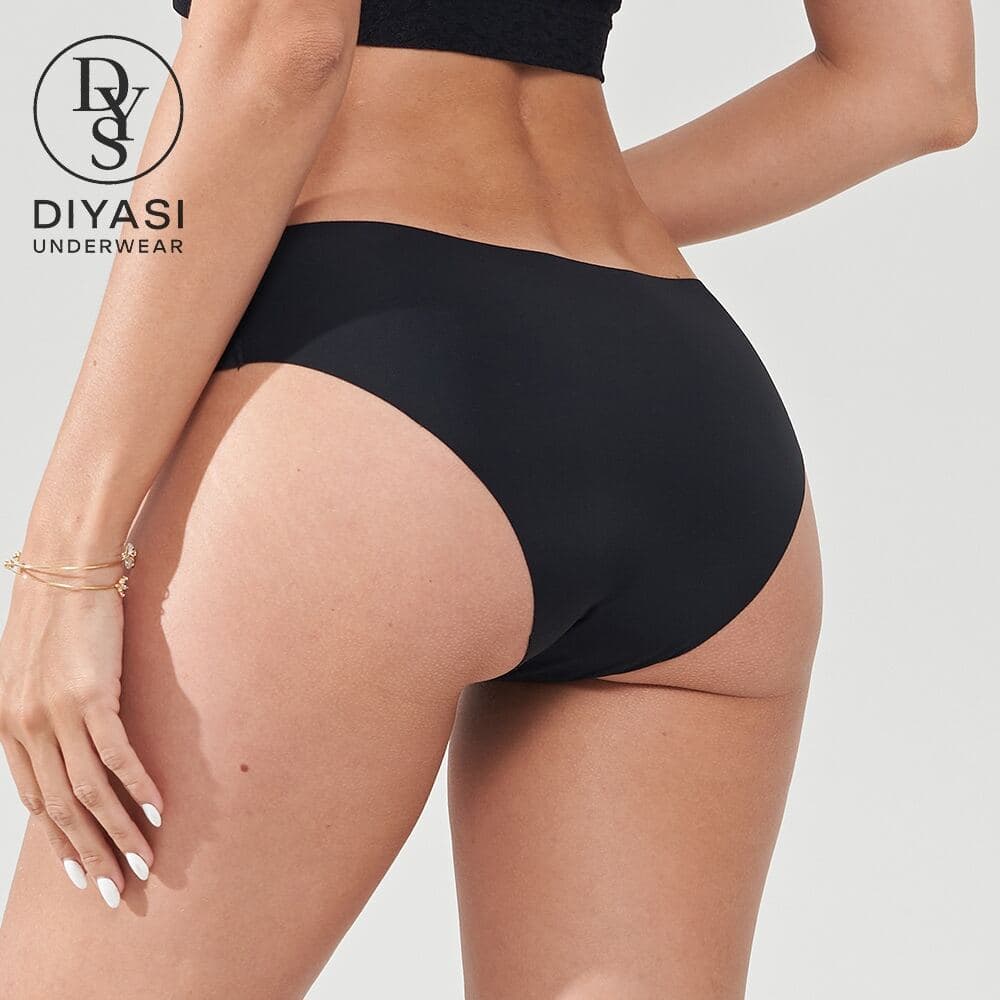
Mark the body, gusset lining, elastic, lace and labels on a front, back and inside image. Attach the material specification to each region. The same garment can legitimately combine fibres for different design purposes, but the composition statement must show what is actually present. The catalogue photo alone will not reveal every layer or attachment method.
DYS323 is a bonded Brazilian seamless brief and DYS311 is a low-rise Brazilian brief with a stitched cotton gusset. Both have polyamide-spandex bodies in their public records. DYS201 is a low-rise cotton-spandex bikini. These are useful comparison samples precisely because their component structures are not identical.
| Question | DYS323 / DYS311 | DYS201 |
|---|---|---|
| Body fabric | Polyamide and spandex | Cotton and spandex |
| Cotton mentioned where? | Gusset lining | Listed main fabric |
| Construction | Bonded or stitched gusset reference | Bikini reference |
| Buyer action | Confirm components and assembly | Confirm full component list |
Test the intended use, not a fibre stereotype
A cotton gusset statement does not prove health, breathability or comfort outcomes. Those depend on the finished construction and the wearer as well as materials. If a retailer wants to claim a performance benefit, define the evidence needed and test the selected size, fabric and care method. Avoid medical language based only on an ingredient list.
For a no-show assortment, assess the visual edge and fit under the intended outer garment. For a cotton-basic assortment, check the body fabric, leg opening and wash appearance. These are separate sample questions; neither product family is automatically a substitute for the other.
Carry the distinction through every channel
The specification, line sheet, ecommerce page, care label and sales pitch should use the same component language. If the factory changes the lining or body material, update all of them together. Keep the approved sample and source record linked to the SKU so a later reorder does not inherit an outdated claim.
A useful retail phrase might identify a polyamide-spandex body with a cotton gusset, if confirmed for the order. It should not shorten that to 'cotton underwear' when the body is not cotton. Ask the target market's labeling reviewer to approve final wording.
Common buyer questions
Is a cotton gusset the same as a cotton body? No. It is one component of the garment.
Can the lining be changed without a new approval? A material or attachment change should be reviewed on a finished sample.
What should the product page state? Identify the actual body and gusset materials separately, with any claim supported by the order specification.
Put your research to work
Compare seamless styles ↗Browse cotton styles ↗Read the gusset guide ↗Request component details ↗Product sources
Product examples refer to the linked DIYASI source specifications. Confirm the final materials, measurements and availability for your selected sample.
DYS323 original product specification ↗DYS311 original product specification ↗DYS201 original product specification ↗A starting point for your collection.
Share your selected model numbers, intended market and sample requirements with the DIYASI team.
Discuss your collection ↗