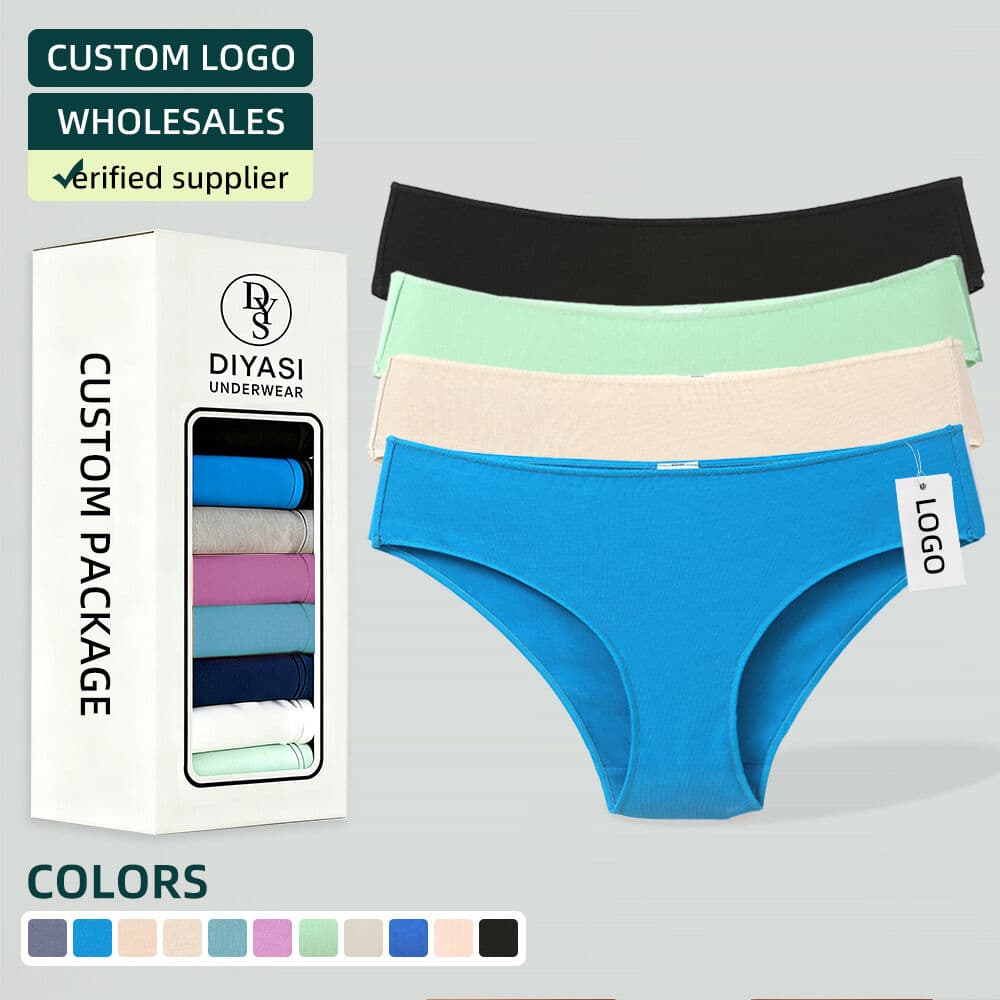
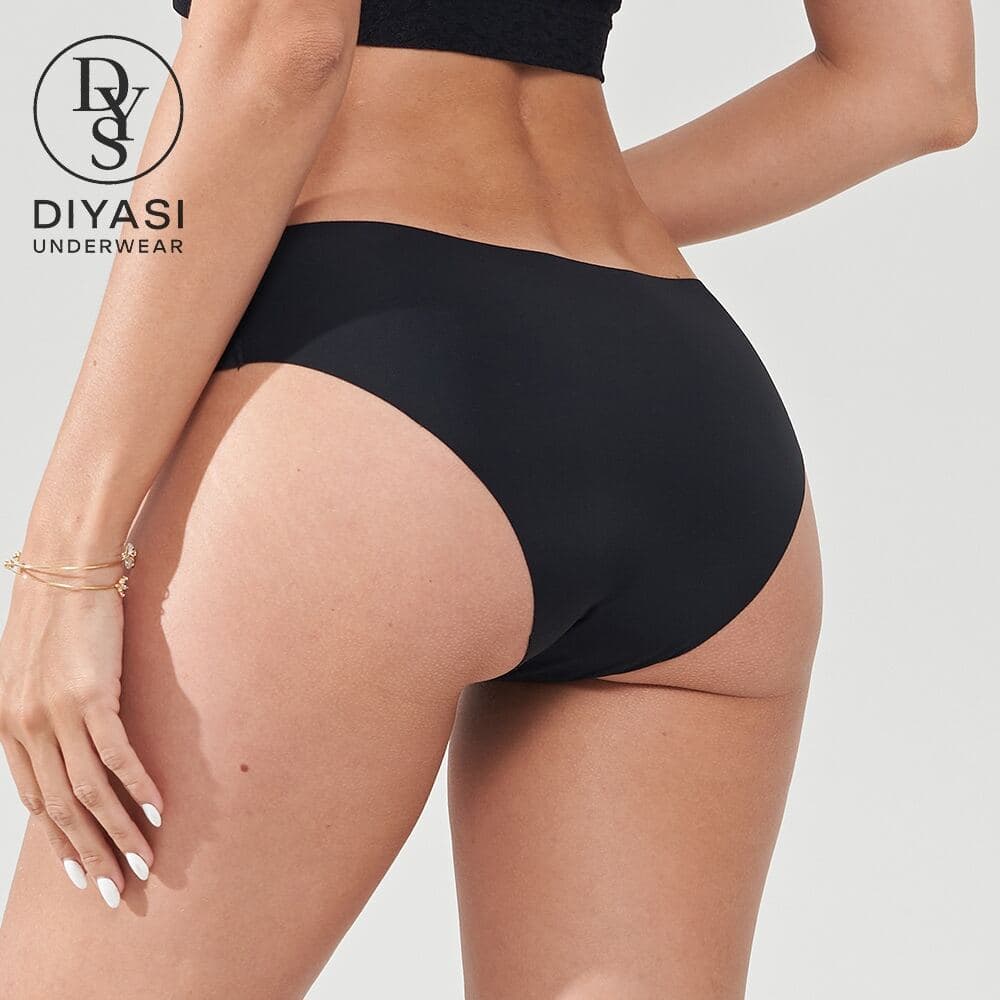
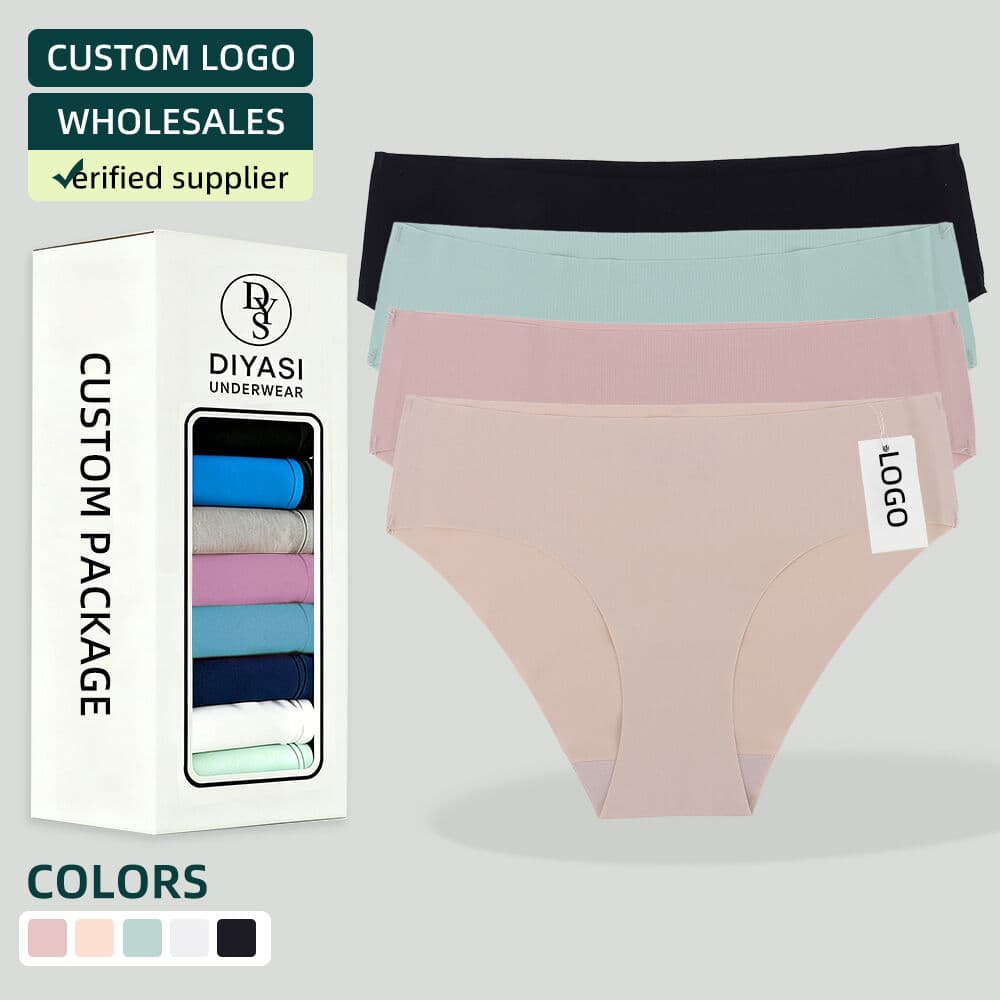
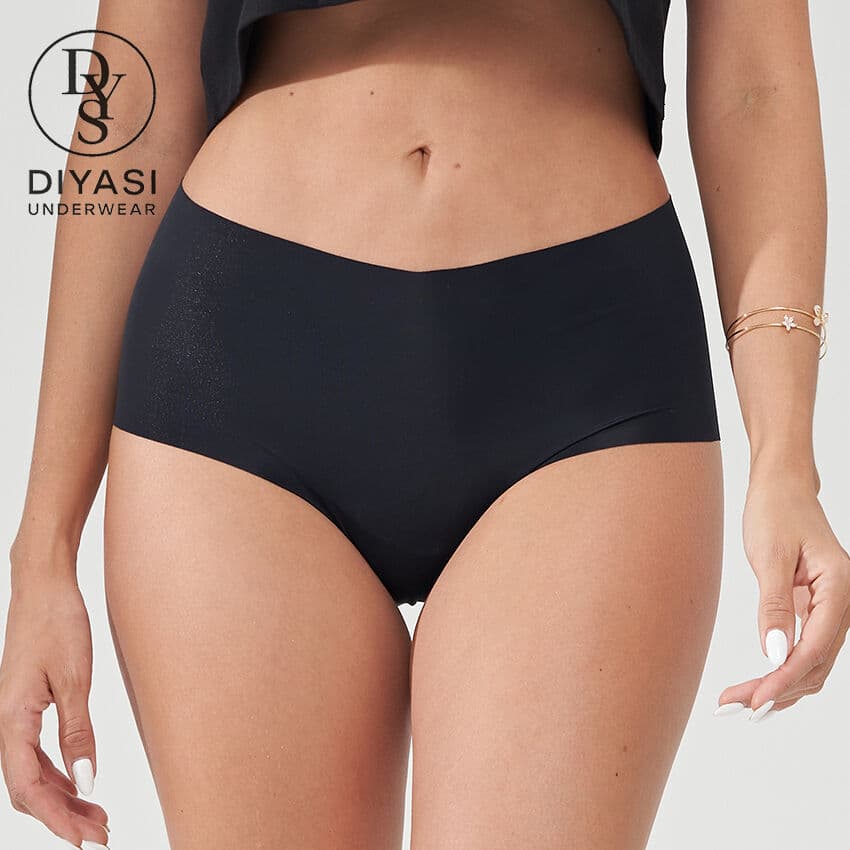
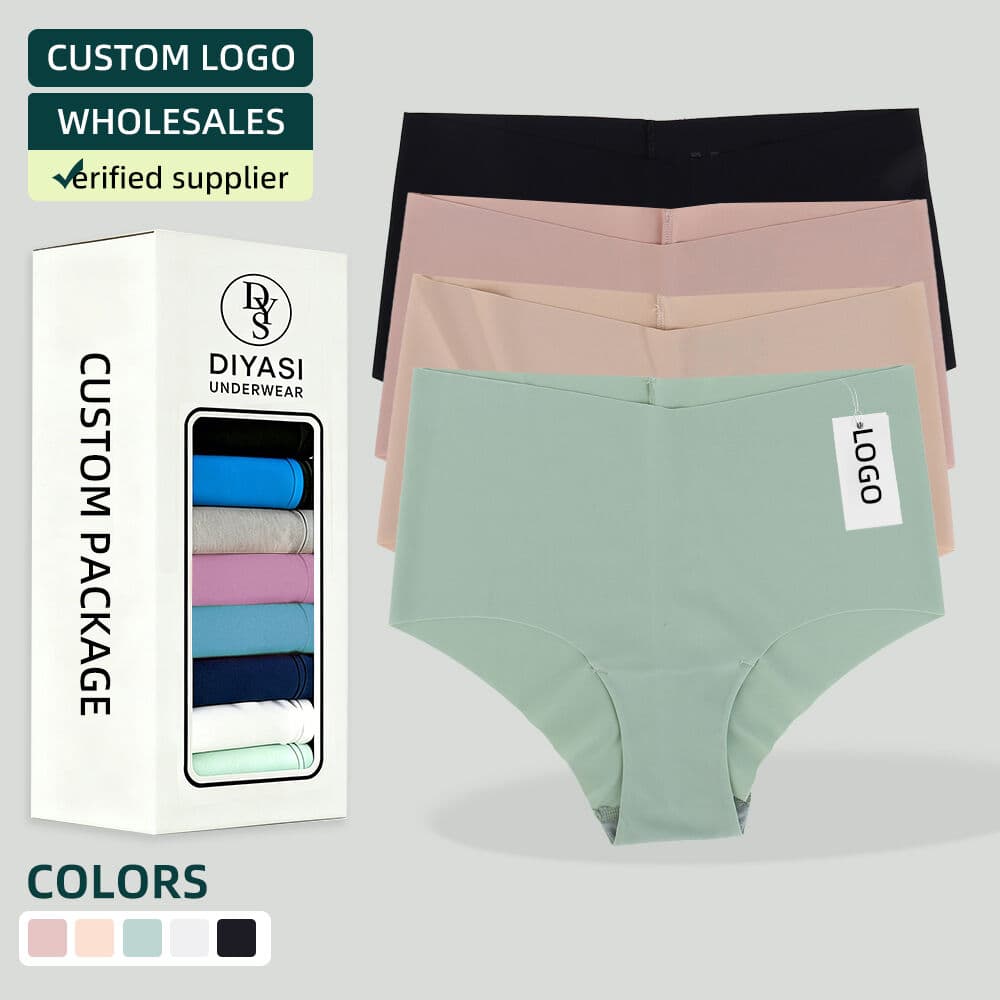
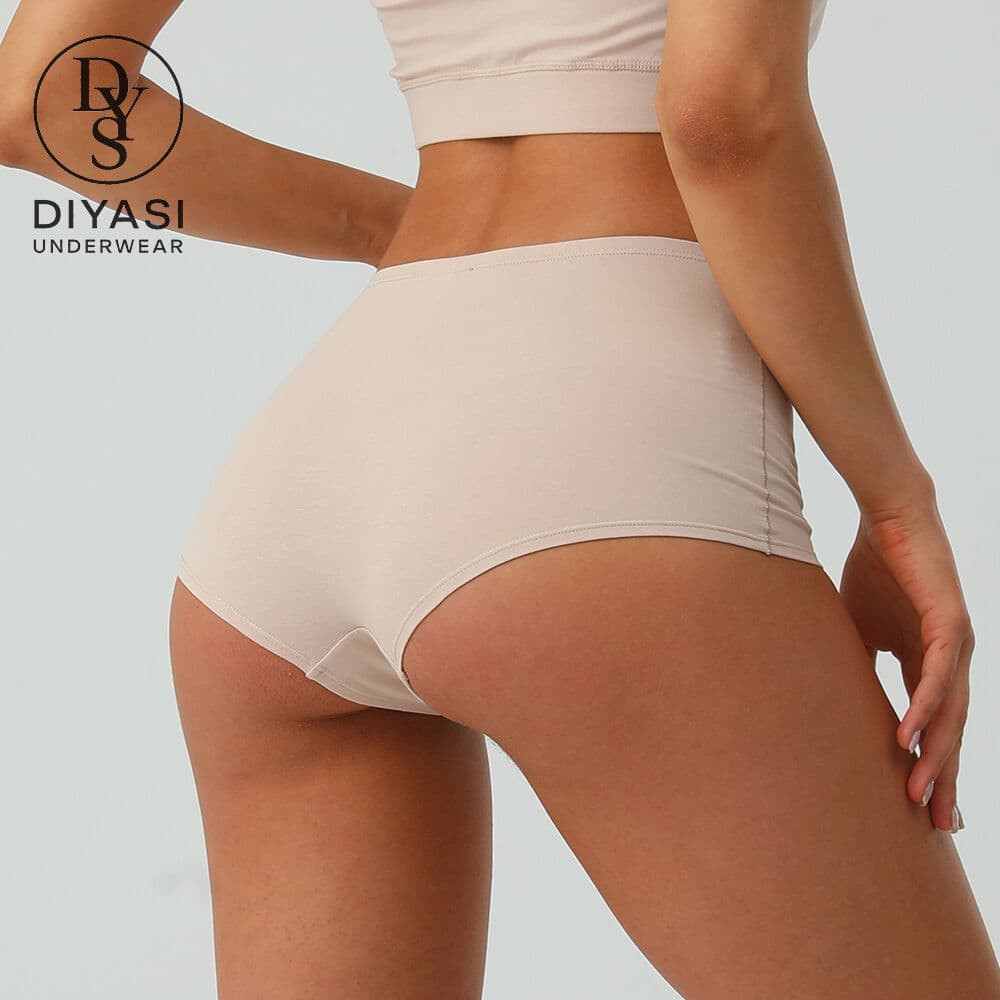
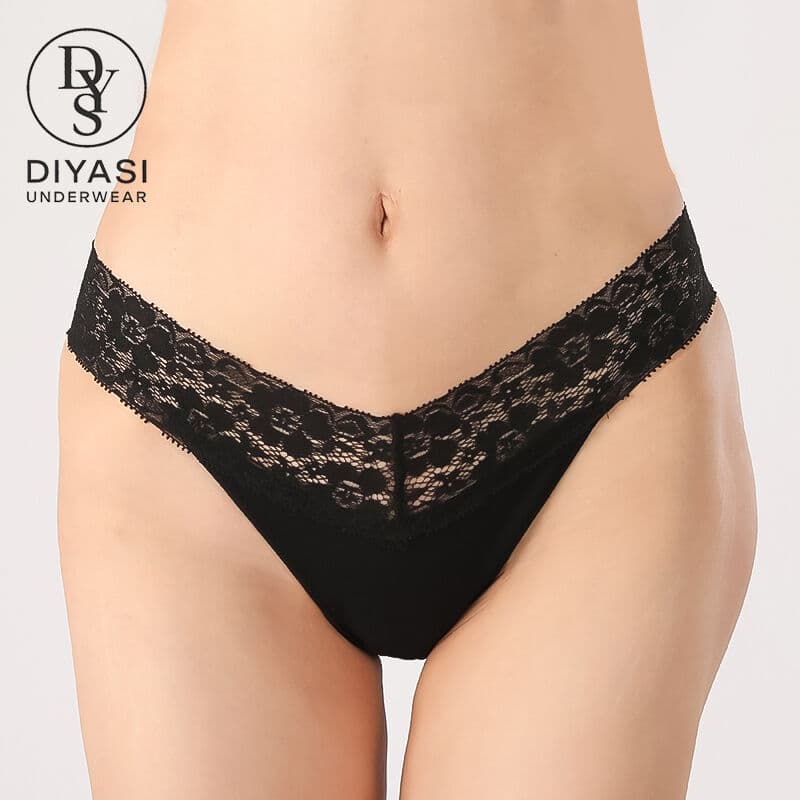
For a private-label underwear range, cotton versus polyamide is a material decision; coverage, edge finish and gusset attachment are separate choices. DIYASI's DYS201 offers a cotton-spandex bikini starting point, while DYS323 and DYS314 use polyamide-spandex bodies with cotton gussets. Choose the product requirements first, then compare finished samples. A fibre percentage alone cannot establish softness, drying speed, durability or how visible an edge will be under clothing.
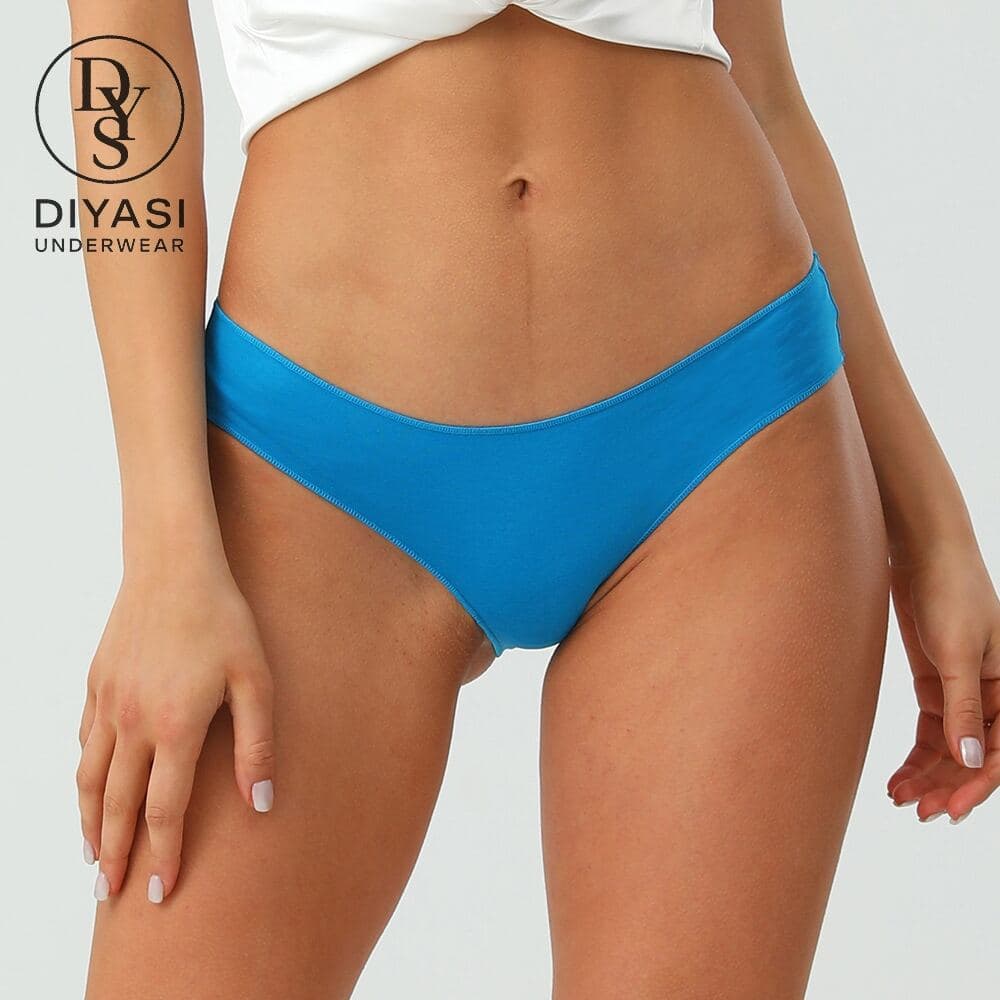
Compare the body fabric and construction separately
A useful supplier comparison identifies both the fibre blend and the garment construction. The current DYS201 specification lists 95% cotton and 5% spandex. DYS323 and DYS314 list an 80% polyamide and 20% spandex body with a 100% cotton gusset. These are specifications for the named models, not a rule for every cotton or polyamide product.
The three examples also have different silhouettes and finishes. DYS201 is a low-rise bikini, DYS323 a low-rise Brazilian with a bonded gusset, and DYS314 a high-waisted full brief with a stitched gusset. Comparing them can help build a range, but it does not isolate the effect of fabric: cut, tension and coverage also change the wearing experience.
| Catalogue example | Listed material | Construction to review |
|---|---|---|
| DYS201 cotton bikini | 95% cotton / 5% spandex | Low-rise bikini shape and finished waist and leg edges |
| DYS323 polyamide Brazilian | 80% polyamide / 20% spandex body; cotton gusset | Laser-cut edges and bonded gusset attachment |
| DYS314 polyamide full brief | 80% polyamide / 20% spandex body; cotton gusset | High waist, full coverage and stitched gusset attachment |
Start with the buyer's intended use
For a cotton-led everyday collection, DYS201 provides a familiar bikini silhouette to review for fit, waistband tension and the desired hand feel. Ask for fabric weight, finish and care requirements where these are important to your brief. Two fabrics with the same cotton percentage can still differ in knit structure and finished feel.
For a collection intended to sit discreetly under fitted clothing, review the laser-cut polyamide styles on the intended wearer and under representative outer garments. Visibility depends on the edge, fit, garment colour and outer fabric together. Do not approve a universal no-show claim from the product photograph alone.
Use the same conditions for sample comparisons
Record the sample size, body measurements and intended fit before comparing styles. Photograph the waist and leg openings in consistent conditions and identify where the garment presses, rolls or moves. If the purpose is to compare materials directly, ask whether comparable silhouettes can be sampled and confirm any development cost first.
Agree a wash-and-wear review appropriate to the intended care instructions. Record dimensional change, colour transfer, surface appearance and recovery; for bonded styles, also examine the bond after washing and stretching. These are proposed approval checks, not claims that a particular style has passed a specified laboratory test.
Specify the gusset and branding as separate components
A cotton gusset does not make the whole garment cotton. Keep body and gusset compositions separate in the technical brief, and agree the required consumer label for the destination market. Attachment also matters: the bonded and stitched examples above need different construction reviews.
Provide the proposed logo size, placement and colour with the model number. Ask the factory to confirm a suitable application method for the actual fabric and assess the branded sample after the agreed care cycle. Do not transfer an approved logo process from one material to another without checking it.
Common questions before choosing a fabric
Is cotton underwear automatically the more breathable option? Fibre content alone does not settle that comparison. Fabric weight, knit, finishes, coverage and testing conditions all matter; request evidence for any specific performance claim.
Does polyamide mean seamless? No. Polyamide names a fibre family, while seamless and no-show describe construction or intended appearance. Review the seams, edges and gusset of the selected style.
Should a first collection include both materials? Only if each serves a defined customer need. Shortlist the exact models and sizes, then confirm sample charges, colour choices and separate custom-component minimums in the quotation.
Put your research to work
Browse cotton underwear styles ↗Compare seamless underwear styles ↗Plan cotton underwear samples ↗Understand seamless and no-show construction ↗Product sources
Product examples refer to the linked DIYASI source specifications. Confirm the final materials, measurements and availability for your selected sample.
DYS201 original product specification ↗DYS323 original product specification ↗DYS314 original product specification ↗A starting point for your collection.
Share your selected model numbers, intended market and sample requirements with the DIYASI team.
Discuss your collection ↗