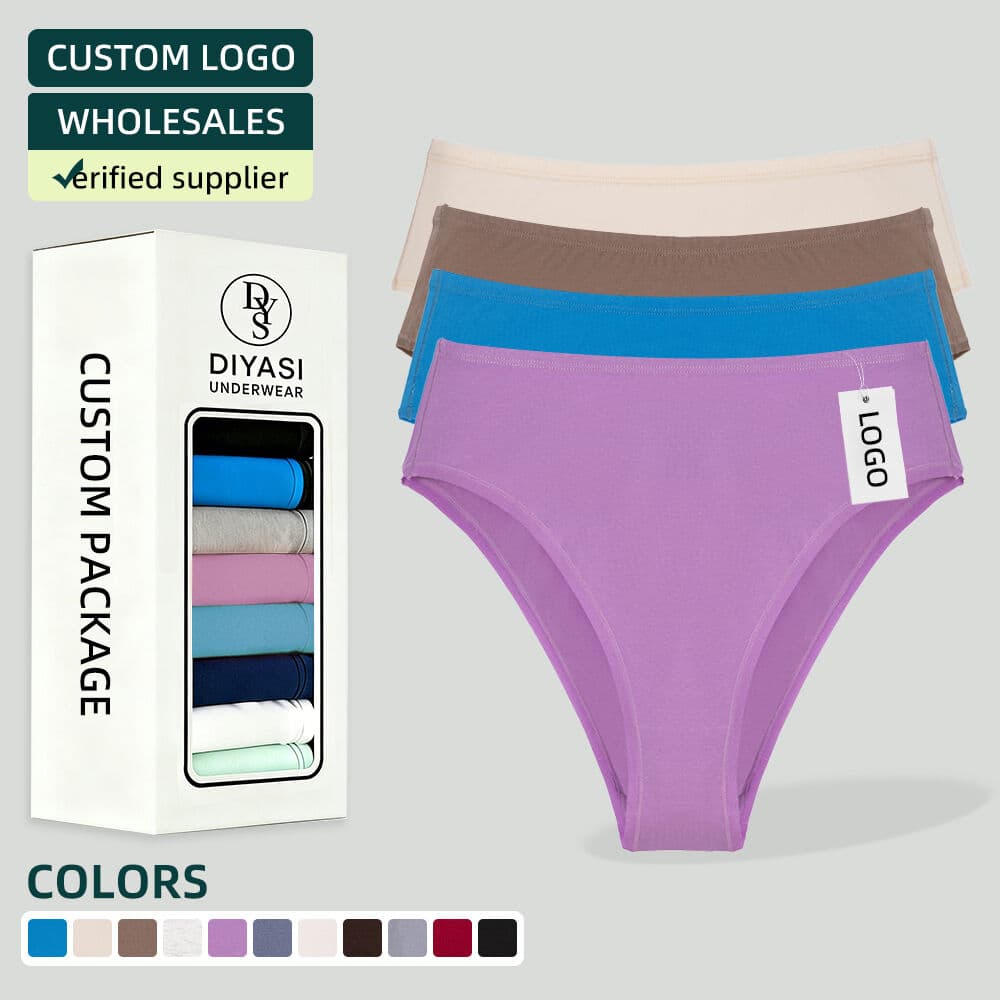
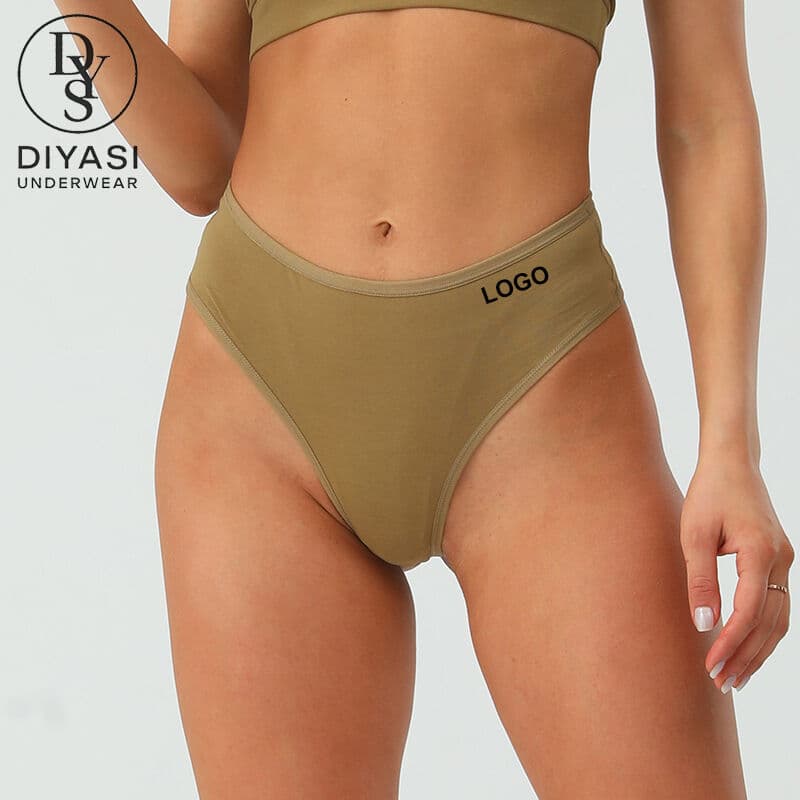
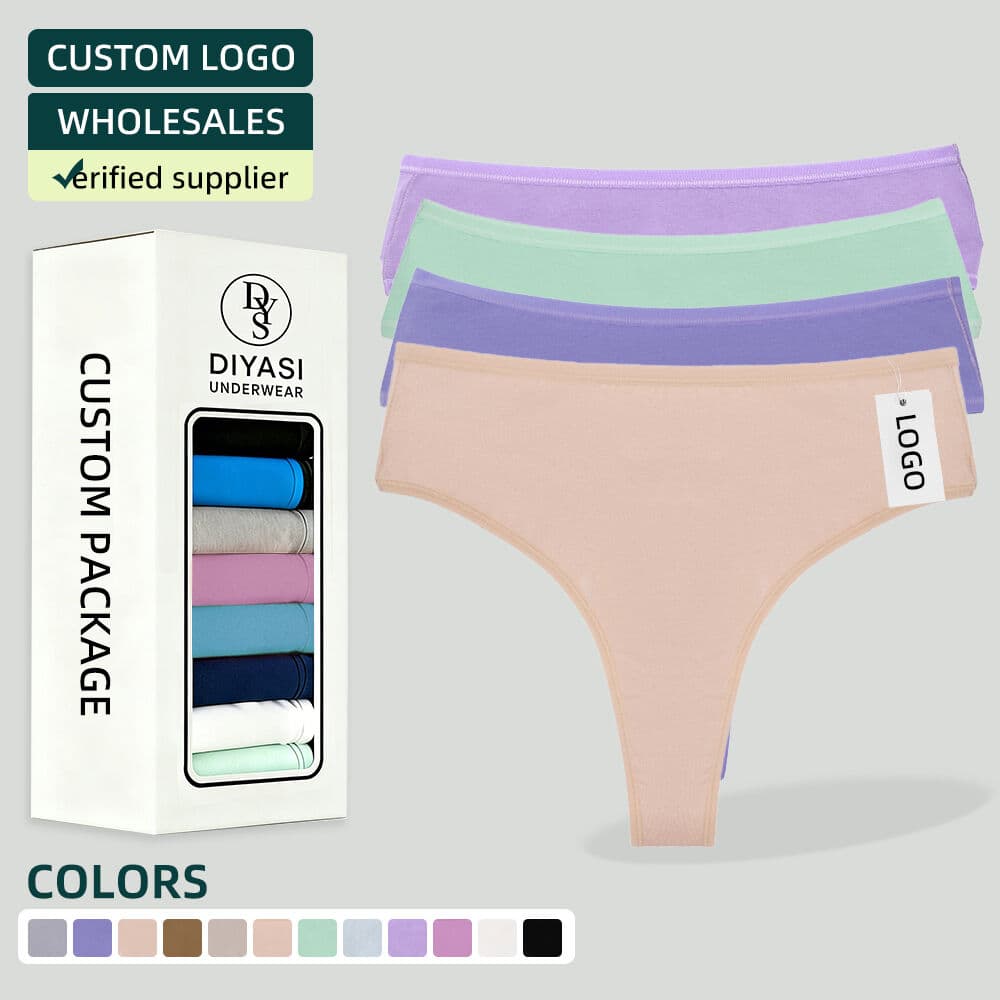
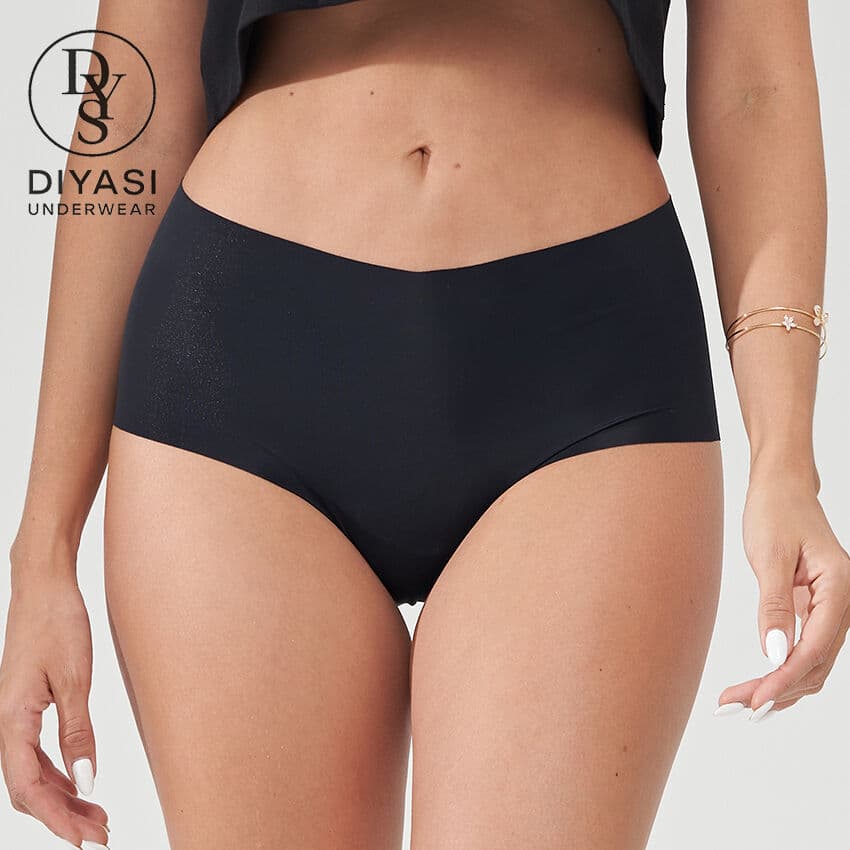
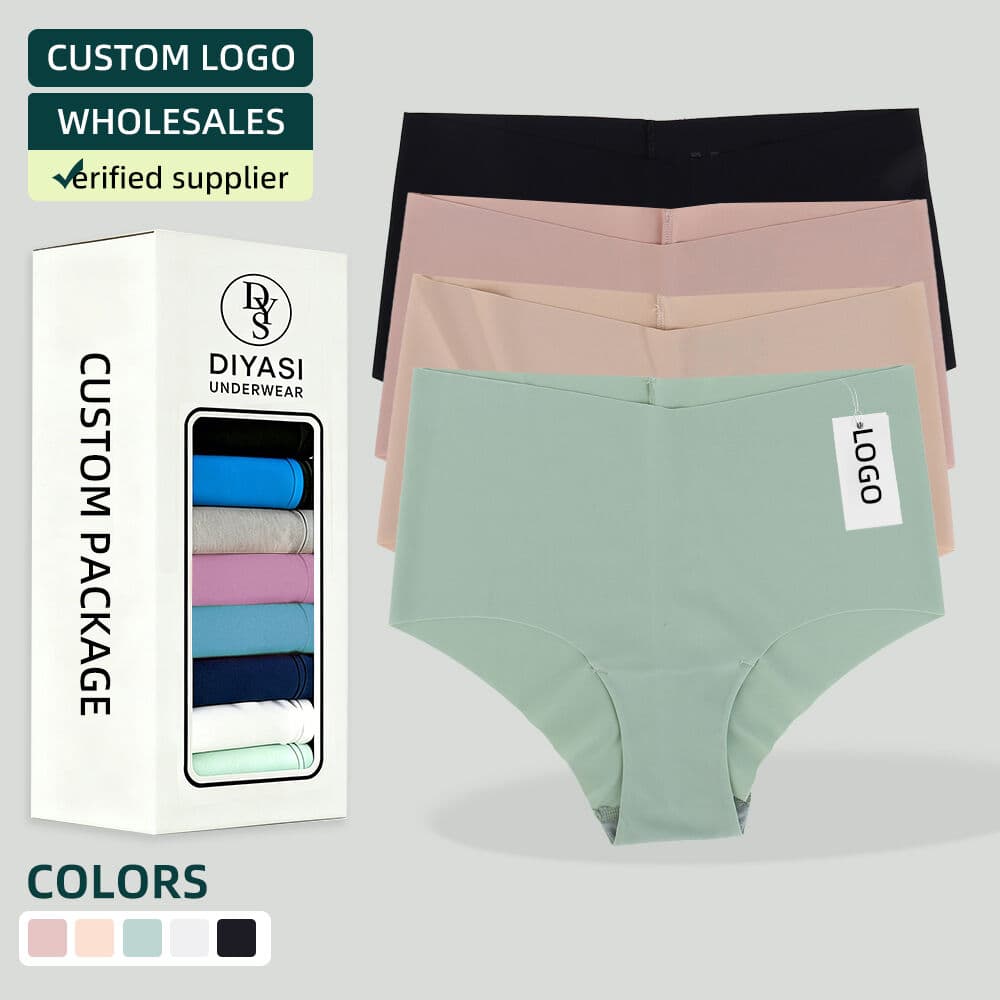
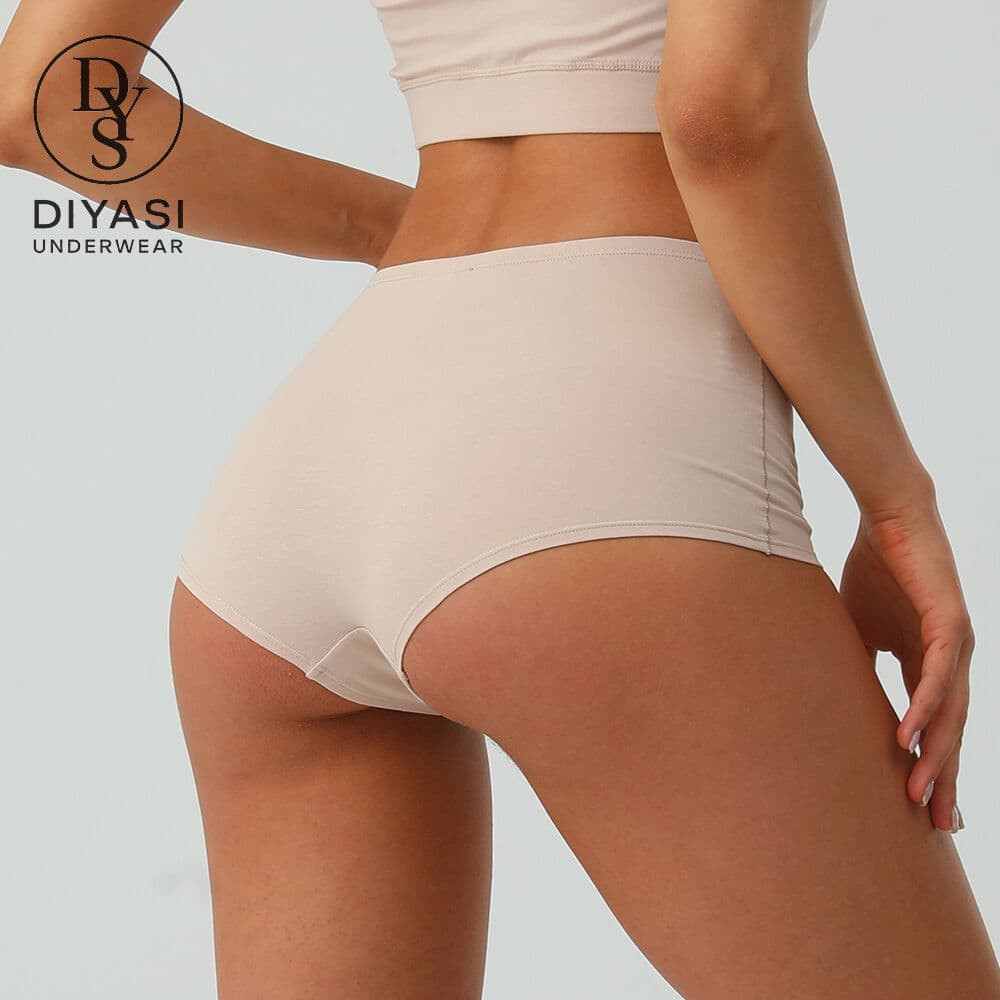
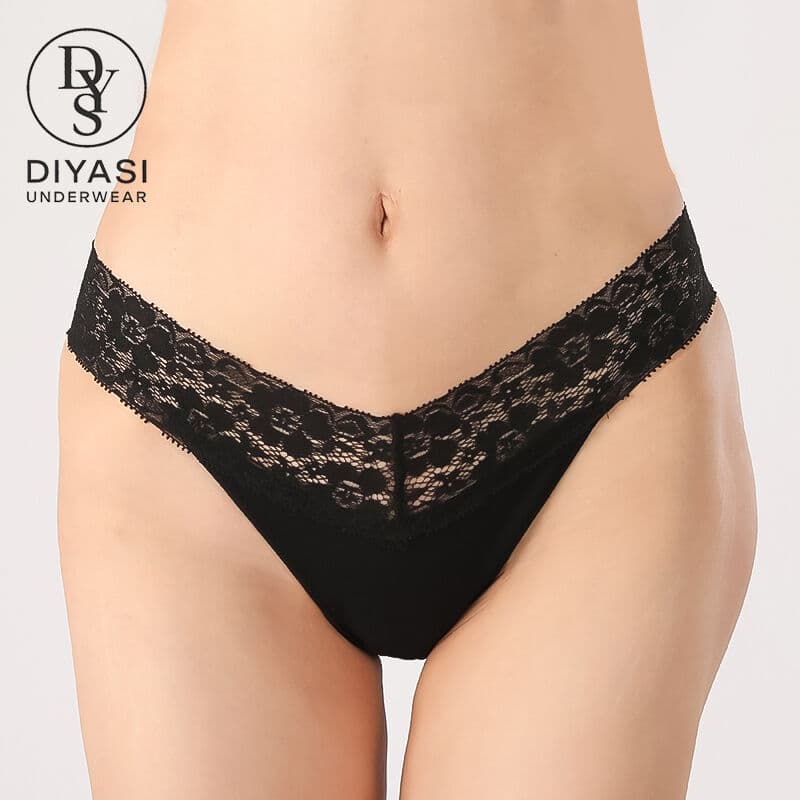
High-waisted briefs and high-waisted thongs can share a higher waistband position while offering very different rear coverage. A high leg opening is another independent feature. For wholesale and private-label selection, define rise, front and back coverage, leg opening and waistband behaviour separately. DIYASI's DYS219, DYS225 and DYS314 give buyers three different high-rise starting points to compare, without treating a high waist as a promise of compression or shaping.
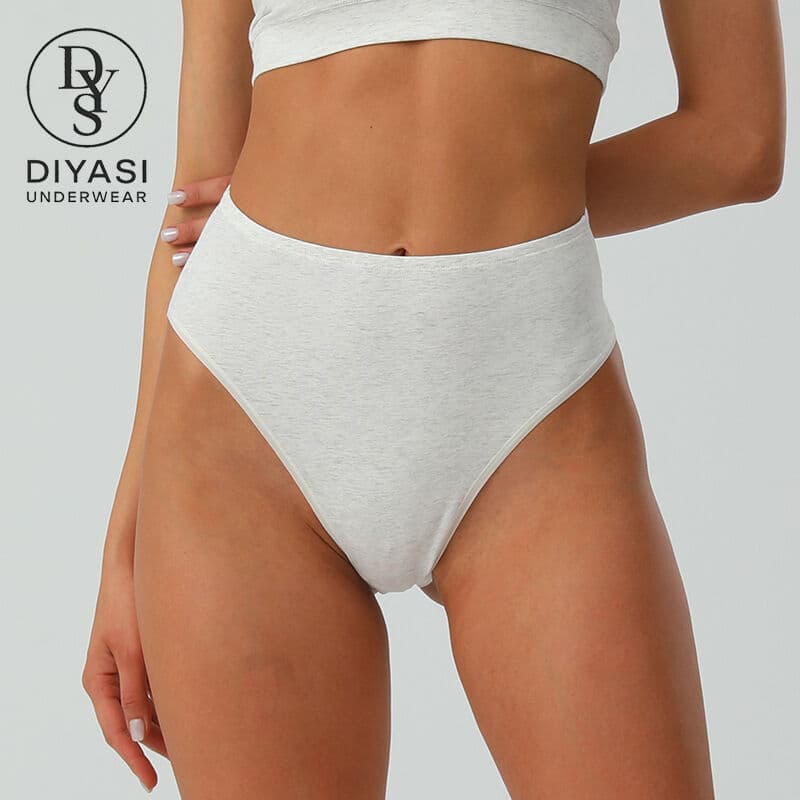
High waist, high leg and full coverage mean different things
High waist describes the intended waistband position. High leg describes the shape and height of the leg opening. Full coverage describes a coverage direction, particularly at the back, and still needs a visual reference and measurements. Combining these words into one label can leave the factory and buyer picturing different garments.
A high-waisted thong may provide more front coverage while retaining a narrow back. A high-leg brief may show more of the upper leg without having the same rear shape as a thong. Ask for front, back and side views of the exact model instead of making a selection from a front photograph alone.
Compare three actual high-rise styles
DYS219 is listed as a high-leg cotton brief, DYS225 as a cotton high-waist thong, and DYS314 as a seamless high-waist full brief. The cotton examples list 95% cotton and 5% spandex; DYS314 lists an 80% polyamide and 20% spandex body with a cotton gusset.
The catalogue size ranges below are references for these models. They do not establish identical measurements between styles or guarantee immediate stock in every size. Confirm the current sample availability and the production measurement chart for the sizes you intend to sell.
| Model | Silhouette and material | Listed sizes |
|---|---|---|
| DYS219 | High-leg, high-waisted brief; cotton-spandex | XXS, XS, S, M, L, XL, 2XL |
| DYS225 | High-waisted thong; cotton-spandex | S, M, L, XL, 2XL |
| DYS314 | High-waisted full brief; polyamide-spandex body | S, M, L, XL |
Build the measurement sheet around coverage
Record finished front rise, back rise and side height using an agreed measurement method. Add waist and leg-opening measurements, gusset length and width, and marked front and back references. A request for two centimetres more coverage is ambiguous unless the drawing shows where the change belongs.
Use the intended wearer and size set to assess the waistband while standing, sitting and moving. Note rolling, pressure or movement at specific locations. A higher rise should not be treated as a correction for every fit issue; the required change may involve the waistband, body length, stretch or leg-opening shape.
Give each silhouette a role in the assortment
One possible starting assortment pairs a high-rise brief for buyers seeking more rear coverage with a high-rise thong for buyers seeking a narrower back. A high-leg cotton style and a laser-cut full brief may also address different material and finishing preferences. This is a way to organise sample questions, not evidence that any combination will sell best.
Keep the first comparison manageable by using a defined colour and size reference. Once the fit is approved, plan the size and colour allocation for each model. Treat a label change, a custom colour and a new silhouette as separate requirements in the quotation, because their development work and component quantities can differ.
Questions to resolve before placing a bulk order
Does high-waisted underwear count as shapewear? Not by itself. Waist position does not establish compression. Any shaping or support claim needs a defined design requirement and appropriate evidence.
Can the same size chart be used for all three styles? Do not assume so. Check the finished measurements, fit allowance and grading of each approved sample, even when the size labels match.
Can a thong be made by narrowing an existing brief? That is a development request rather than a simple name change. The back, leg opening and gusset relationship must be reviewed together, with sample work and feasibility confirmed by the factory.
Put your research to work
Compare the high-waisted collection ↗Browse thongs and tangas ↗Prepare sizes and labels for your market ↗Compare cotton and polyamide underwear ↗Product sources
Product examples refer to the linked DIYASI source specifications. Confirm the final materials, measurements and availability for your selected sample.
DYS219 original product specification ↗DYS225 original product specification ↗DYS314 original product specification ↗A starting point for your collection.
Share your selected model numbers, intended market and sample requirements with the DIYASI team.
Discuss your collection ↗