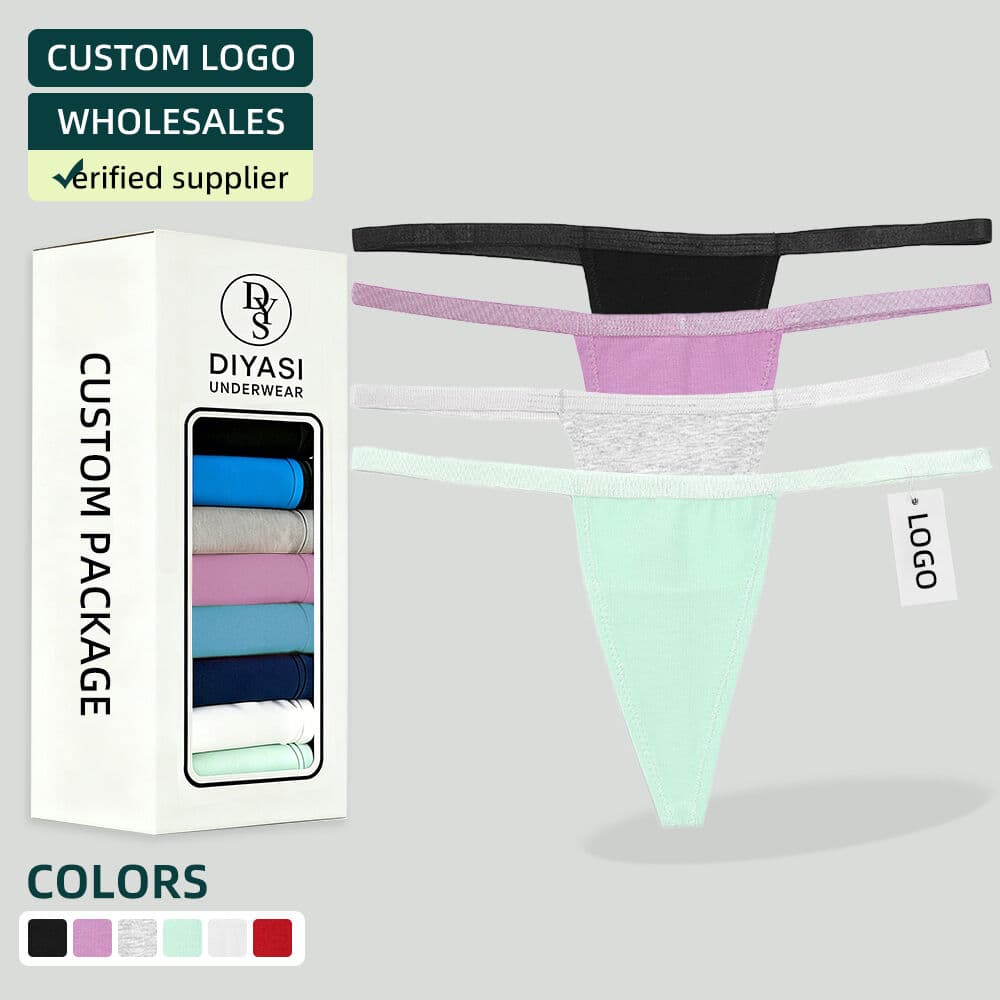
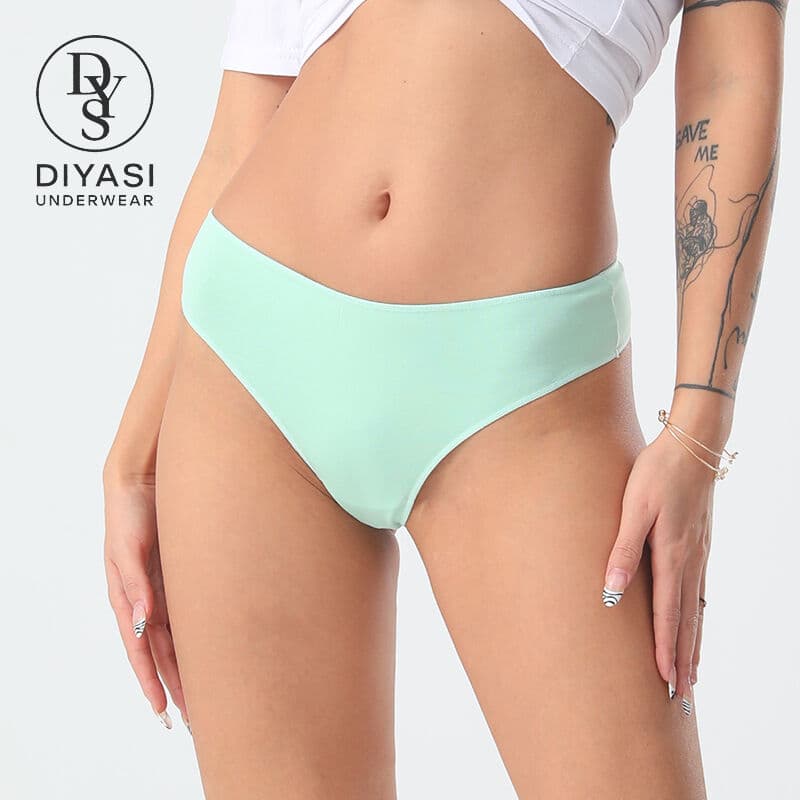
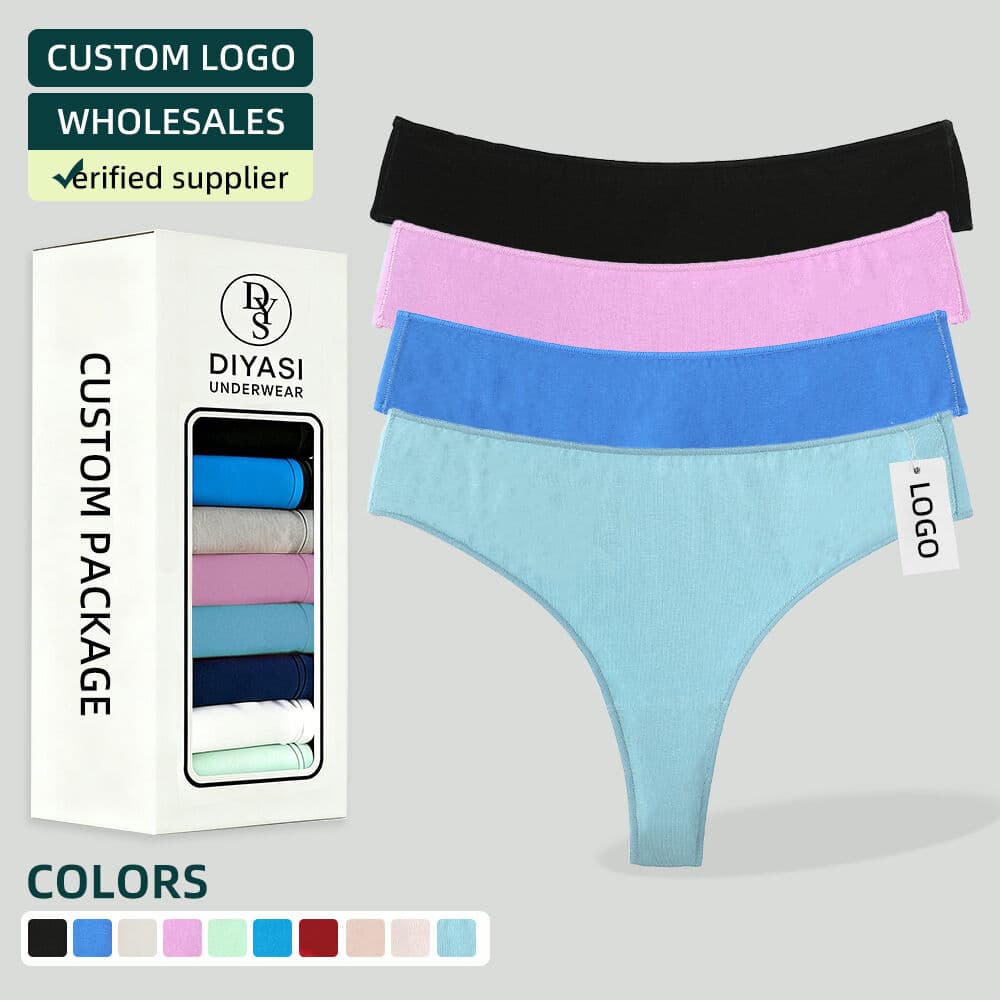
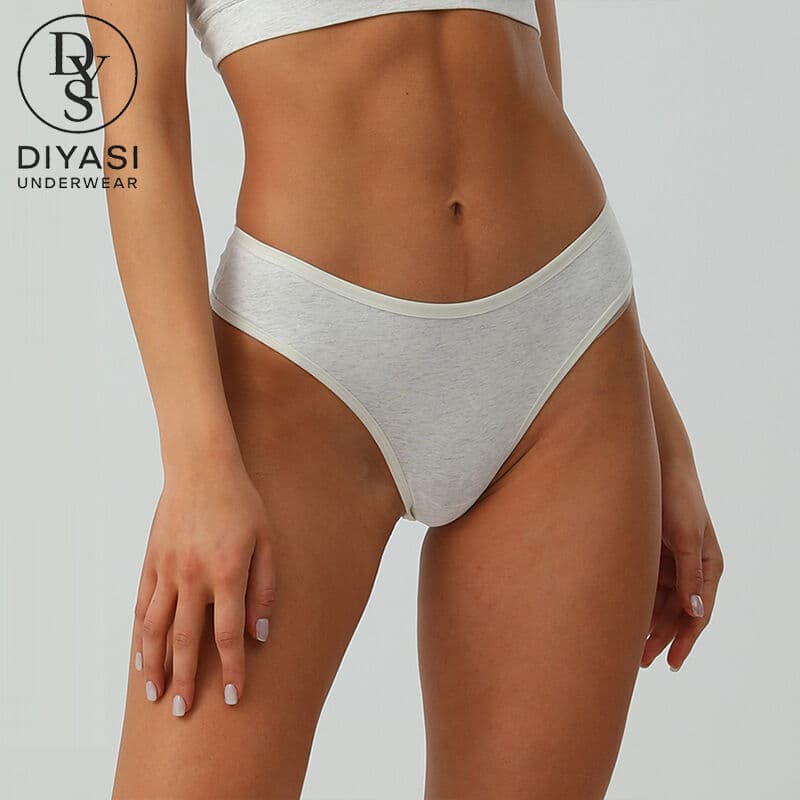
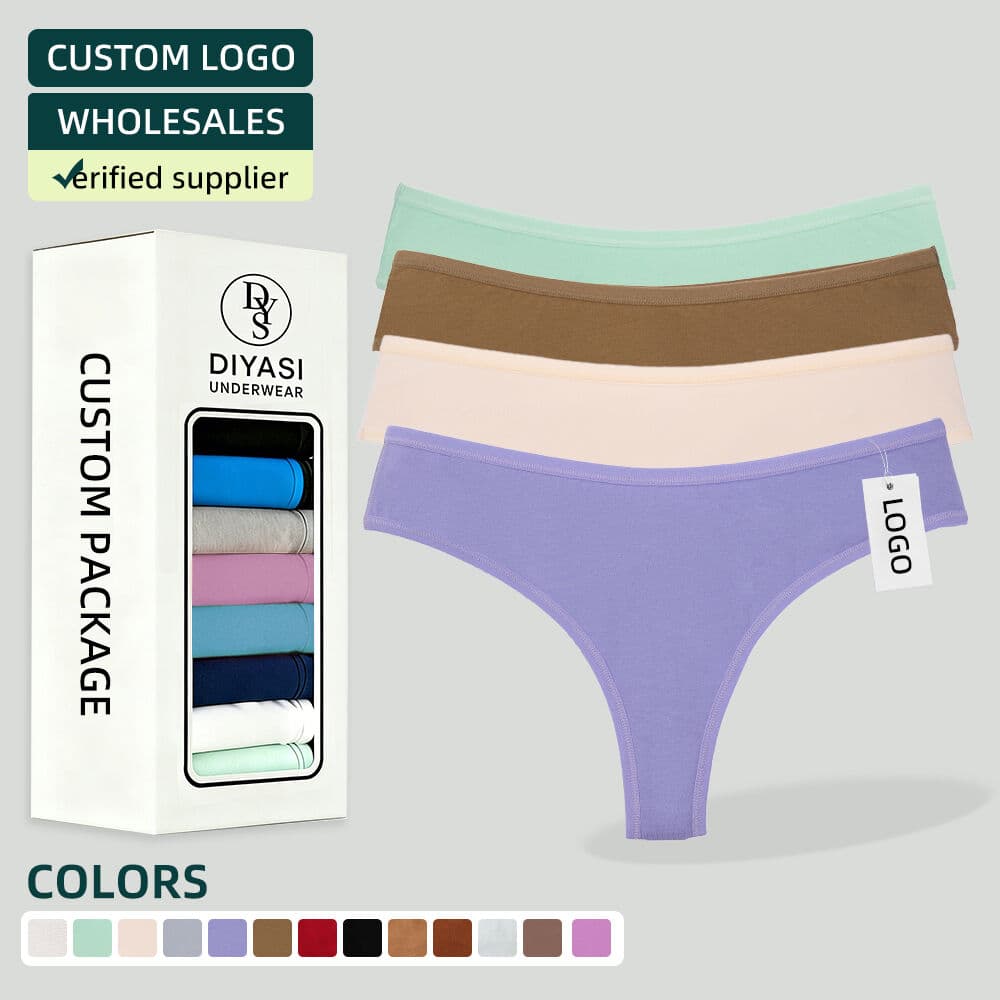
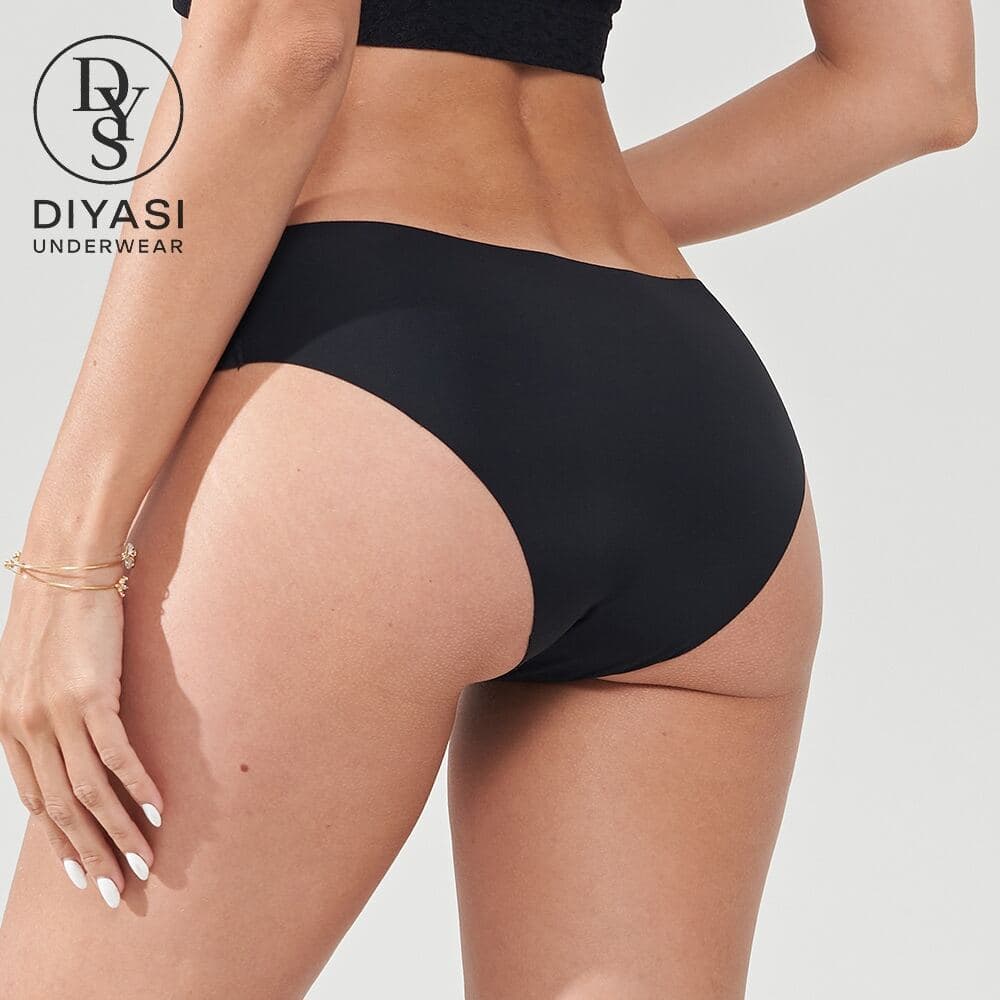
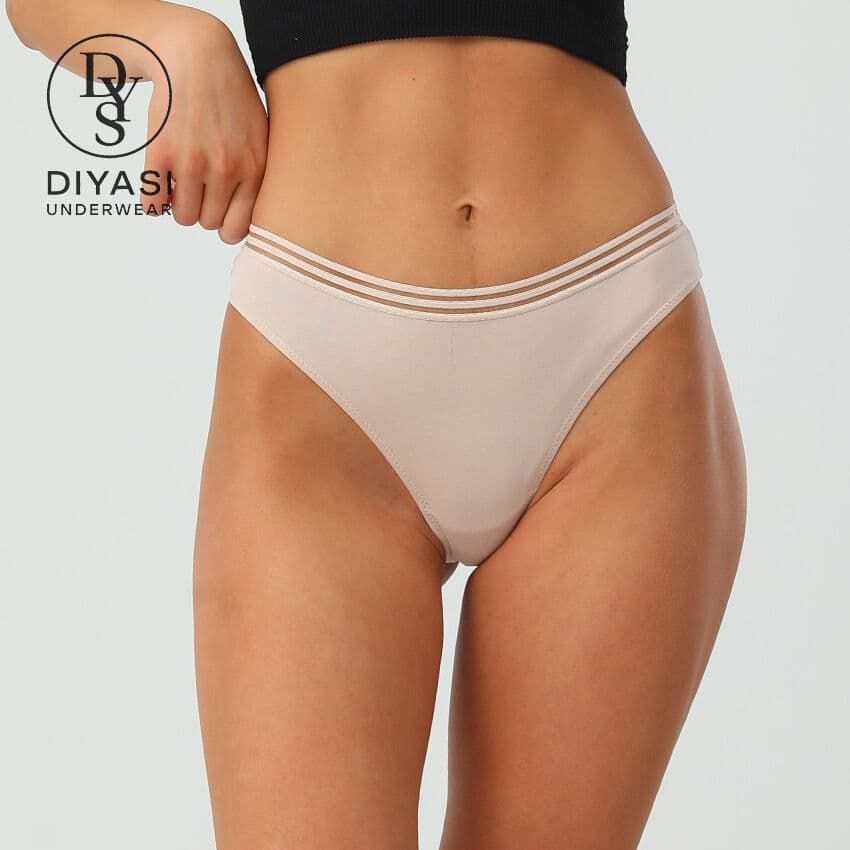
Thong, G-string and T-string names describe related minimal-coverage styles, but suppliers do not use the terms with identical definitions. Compare the actual back panel, side construction, front coverage and rise before choosing a private-label reference. DIYASI lists DYS224 as a thong, DYS204 as a G-string and DYS230 as a low-rise T-string. Their model numbers and physical samples provide a more precise buying language than the silhouette names alone.
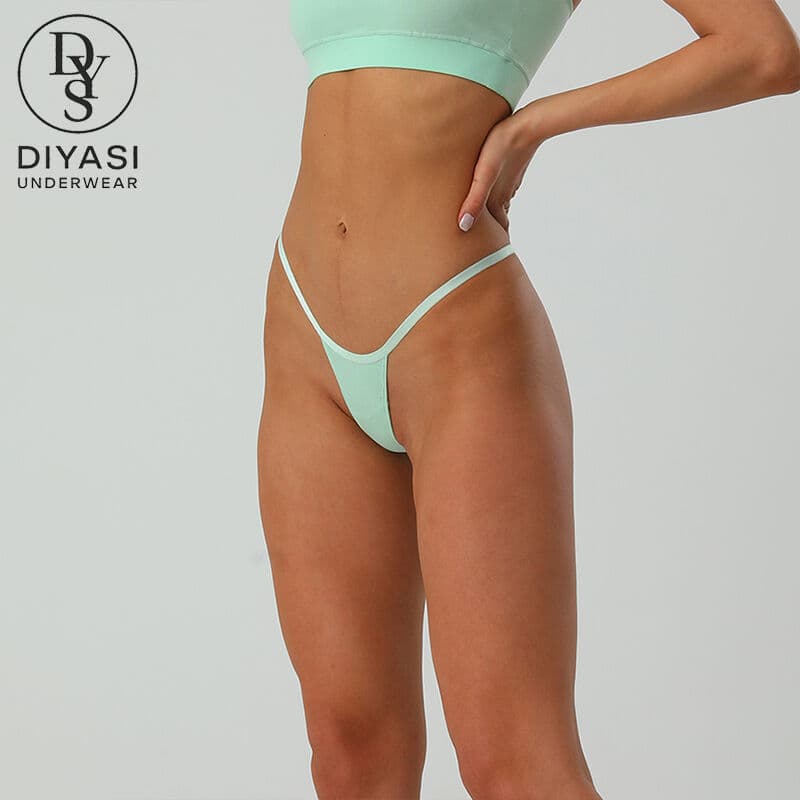
Compare the visible construction, not a rigid naming rule
In common usage a G-string often has a narrower string-like back than a thong, while T-string can refer to the arrangement of narrow straps. These are useful starting descriptions rather than a universal measurement standard. In particular, the DYS230 description refers to a minimal Y-shaped back despite the T-string product name.
All three selected catalogue styles list 95% combed cotton and 5% spandex. That shared material direction does not establish matching fabric weight, strap tension or fit. Ask for the inside and back views alongside the front image before deciding which style matches the intended collection.
| Model | Catalogue reference | Detail to clarify |
|---|---|---|
| DYS224 | Regular-rise essential cotton thong | Width and shape of the back panel |
| DYS204 | Regular-rise cotton stretch G-string | Narrow-back construction and joins |
| DYS230 | Low-rise cotton T-string | Slim sides, front coverage and actual back outline |
Put coverage and strap dimensions into the brief
Use a labelled front-and-back drawing to identify side width, back width at an agreed point, front rise and gusset dimensions. If the design includes straps, define where their width and length are measured and whether the measurement is taken relaxed or under an agreed condition.
Show how the narrow back meets the gusset and waistband. A request to make the back smaller can mean reducing panel width, changing its length or altering the attachment angle. Those changes can affect fit differently and should not be left to interpretation.
Check pressure and stability on the sample
Assess the waist, side straps and joins while standing, sitting and moving. Record the position of any pressure or shifting, then discuss whether the pattern, elastic tension or construction needs revision. Simply ordering a larger size may change coverage without resolving the original issue.
Review the inside finish where components meet. Check for bulky joins, rough thread ends and uneven attachment. A minimal silhouette gives the buyer fewer visible panels to compare, making these small construction details especially useful in the sample feedback.
Choose sizes and branding for the exact reference
DYS224 is listed from S to 2XL; DYS204 and DYS230 list S to XL. Confirm the range and availability for the planned order. A matching size letter does not imply the same finished measurements across the three shapes.
Identify where branding and required information can fit without crowding narrow straps or creating an uncomfortable join. Agree the label method and placement on the actual garment before approving artwork. Keep the selected model and any pattern revision together in the technical pack.
Questions about minimal-coverage styles
Are all G-strings lower rise than thongs? No. Rise and back coverage are independent features; compare their measurements separately.
Does a narrower back guarantee invisible lines? No. Edge finish, size, fabric and the outer clothing also matter. Assess the finished sample under its intended clothing.
Can a front photo confirm the exact shape? It cannot show the back or inside construction. Include those views and a sample reference in the enquiry.
Put your research to work
Browse thongs and tangas ↗Compare tanga, bikini and thong coverage ↗Specify measuring points in a technical pack ↗Choose an underwear label method ↗Product sources
Product examples refer to the linked DIYASI source specifications. Confirm the final materials, measurements and availability for your selected sample.
DYS230 original product specification ↗DYS204 original product specification ↗DYS224 original product specification ↗A starting point for your collection.
Share your selected model numbers, intended market and sample requirements with the DIYASI team.
Discuss your collection ↗