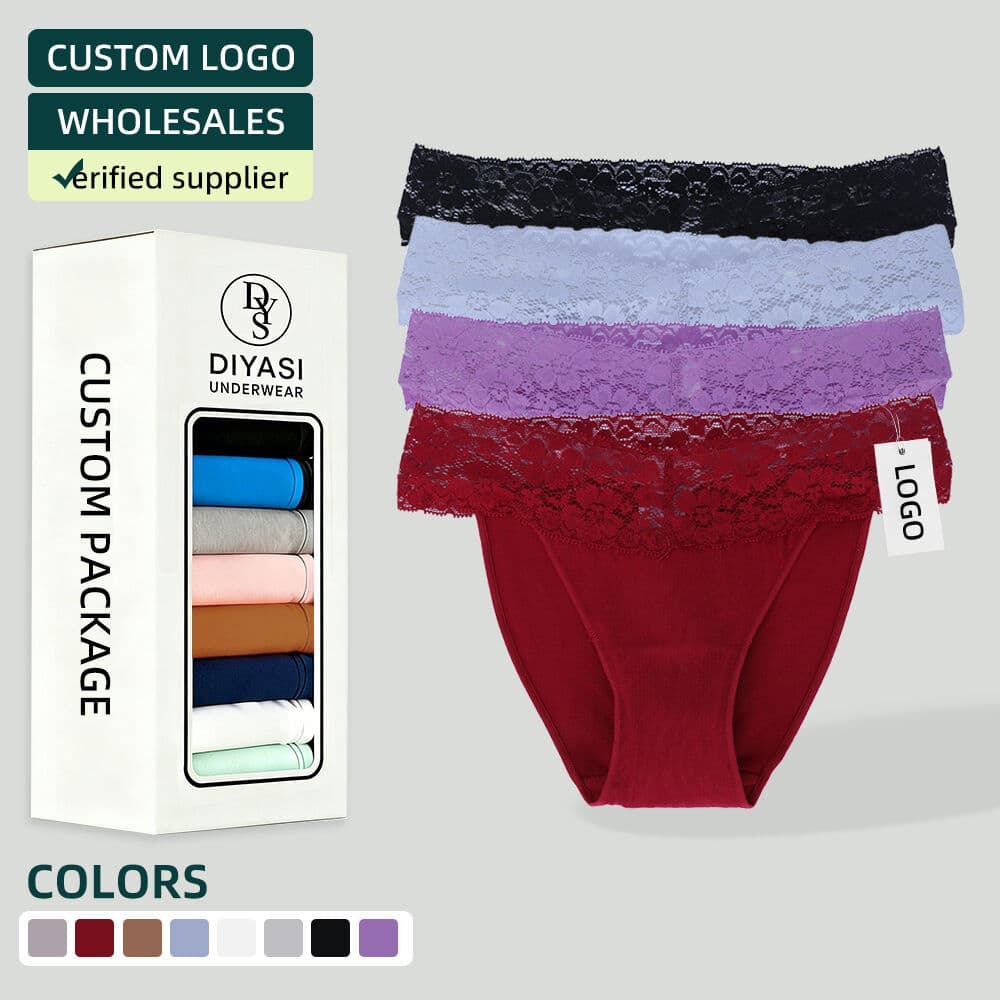
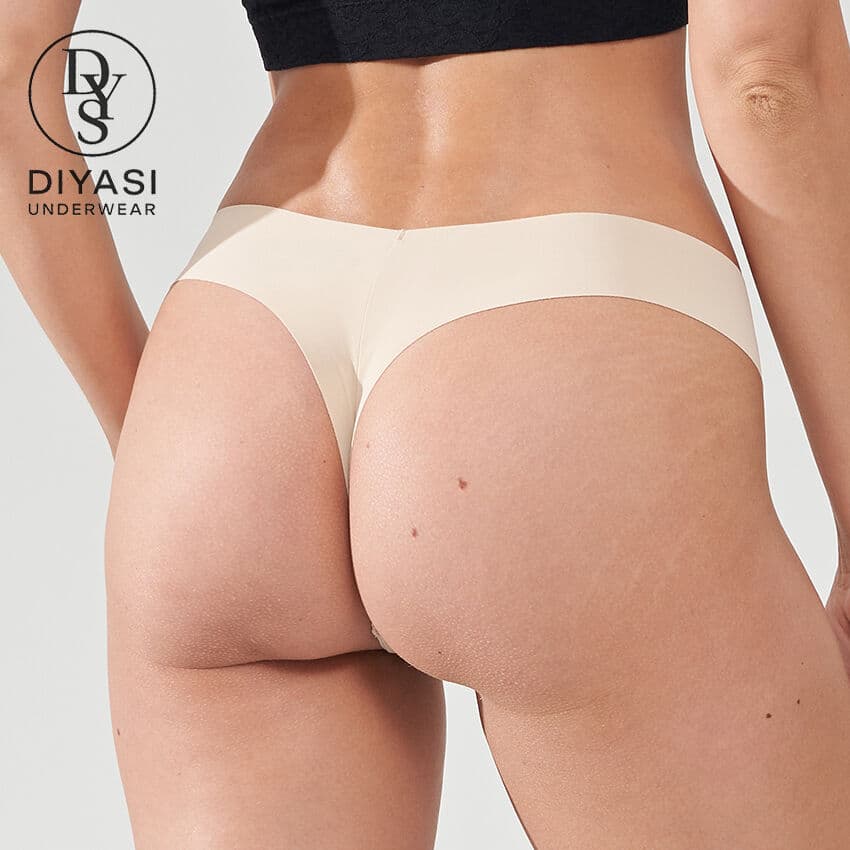
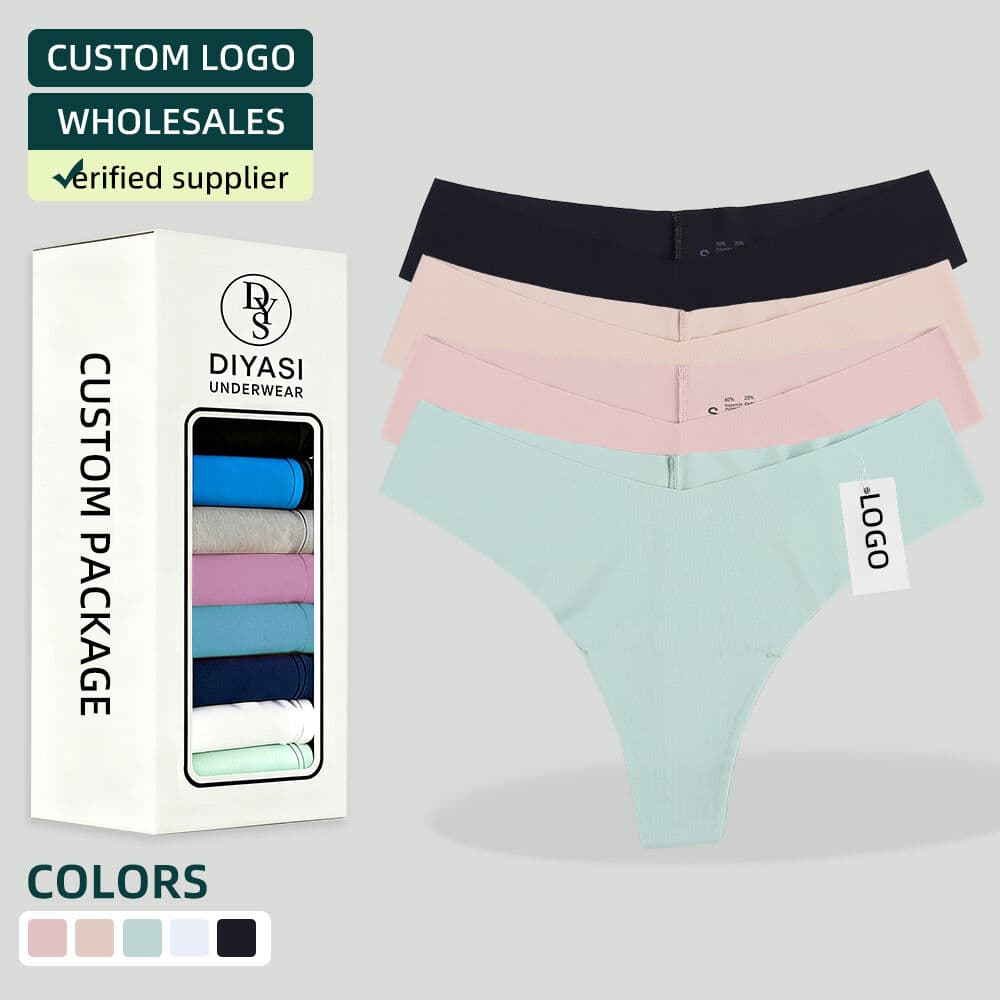
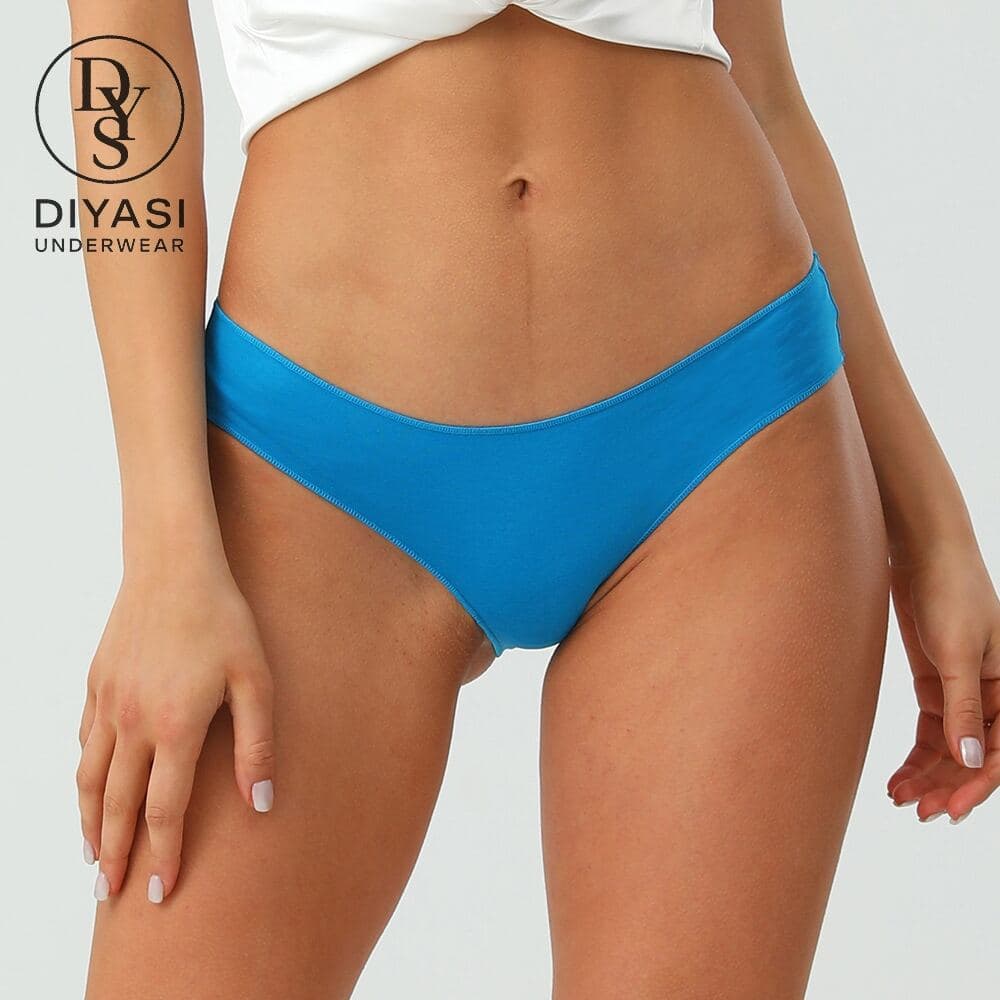
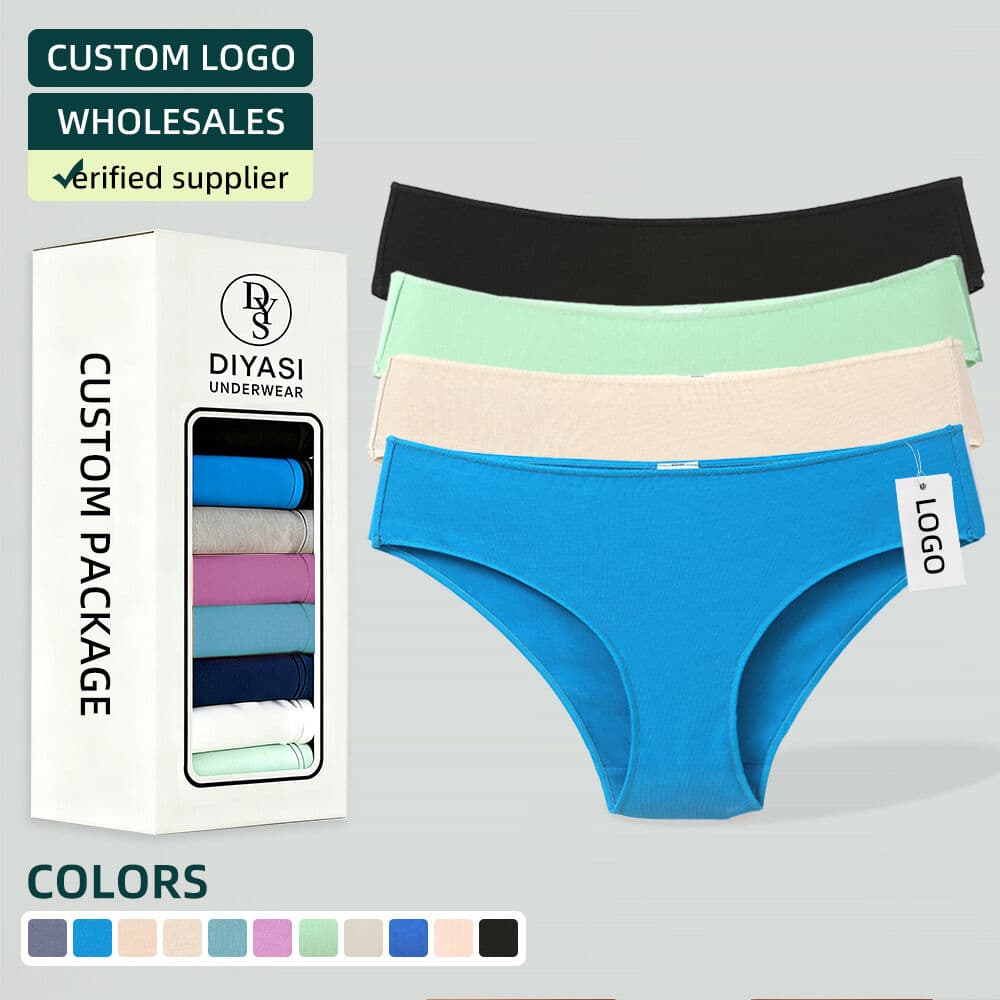
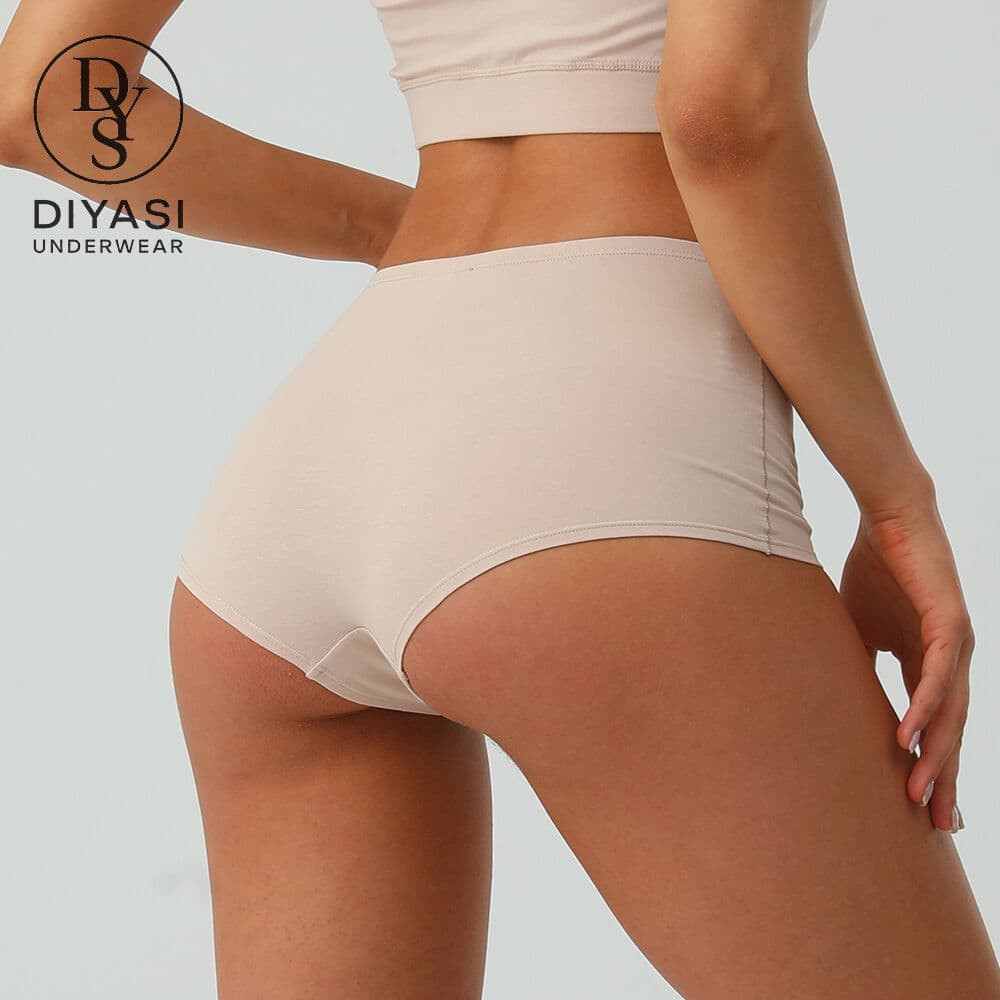
A V-waist underwear brief should define the shape of the waistband separately from rise and rear coverage. Record the centre-front dip, the height at the sides and the back-waist position on a drawing with agreed measurement points. DIYASI's LS005-142 lace brief and DYS301 seamless thong both use a V-shaped waist, while DYS201 offers a low-rise cotton bikini reference. Their shared low-rise direction does not make their waist construction or fit interchangeable.
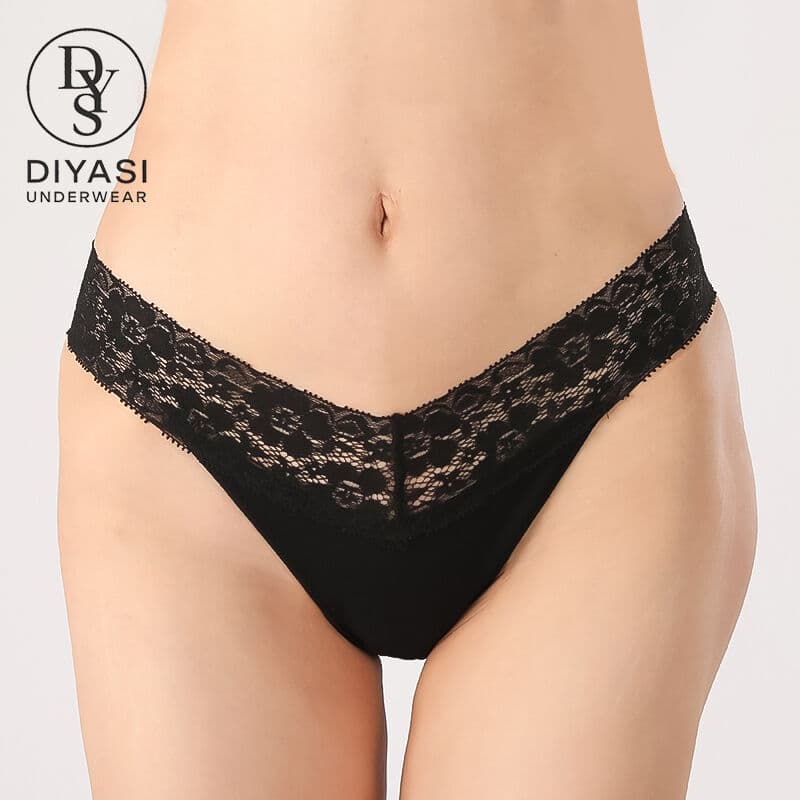
Separate waist shape from the rest of the silhouette
A V-shaped waist describes the front outline. It does not tell you whether the garment is a brief or thong, how much back coverage it provides, or how tightly the waistband fits. Those decisions belong in separate fields of the development brief.
LS005-142 combines a cotton-spandex body with a polyamide-spandex lace waistband. DYS301 uses a polyamide-spandex body with a cotton gusset. Compare their pattern lines and materials together; the visual shape can be similar while the edge finish and stretch behaviour differ.
| Reference | Waist and body direction | What to specify |
|---|---|---|
| LS005-142 | Low V-waist lace-and-cotton brief | Lace width, centre join and front dip |
| DYS301 | Low-rise seamless V-waist thong | Front outline, edge finish and back-waist position |
| DYS201 | Low-rise cotton bikini brief | Comparison waist position and finished edge tension |
Draw the V before assigning a rise measurement
Mark a consistent horizontal reference line and show the distance to the centre-front waist and both side-waist points. Define how front rise is measured through the garment. Otherwise one reviewer may measure to the low point of the V while another measures to an imagined straight waistband.
Record back rise and side height independently. A request to lower the front does not automatically mean lowering the back or narrowing the side panel. Add a front and back technical drawing with the revised line highlighted so the pattern maker can identify exactly what changes.
Review the centre join and the full waistband
For a lace V, inspect the centre join inside and outside. Note symmetry, seam bulk, exposed thread ends and how the lace motif meets at the join. Specify which visual details require approval; do not assume perfect motif matching is included without discussing feasibility and cost.
For either construction, review the waist relaxed and during the agreed fit movements. Check whether the centre lies in the intended position, the sides feel balanced and the back stays stable. Record rolling or gaping at a named point instead of describing the entire waistband as too loose.
Carry the shape through the size range
A V that looks balanced on one size may need different grading decisions at the ends of the range. Ask how centre depth, side height and waistband length change between sizes. Review representative size-set samples with the same measurement definitions used for the base size.
Keep each approved drawing and sample under a version number. When requesting a colour or label change later, state whether the V outline remains as approved. This prevents a branding revision from accidentally reopening the fit specification.
Common V-waist development questions
Does V-waist mean high-leg? No. Waist outline and leg-opening height are separate design choices and should have separate drawing references.
Can a straight waistband simply be cut into a V? Treat that as a pattern and construction change. The front panel, edge finish and stretch balance need review before the factory can confirm the development work.
Which V-waist style is more comfortable? A product name cannot settle that question. Compare the intended size, coverage and material with physical samples and specific wearer feedback.
Put your research to work
Explore lace underwear references ↗Compare seamless underwear styles ↗Build an underwear technical pack ↗Review lace sourcing considerations ↗Product sources
Product examples refer to the linked DIYASI source specifications. Confirm the final materials, measurements and availability for your selected sample.
LS005-142 original product specification ↗DYS301 original product specification ↗DYS201 original product specification ↗A starting point for your collection.
Share your selected model numbers, intended market and sample requirements with the DIYASI team.
Discuss your collection ↗